

Can You Sue Amazon After a Delivery Van Crash in Indiana?
How Amazon Delivery Crash Claims Work in Indiana
Key Takeaways: You may be able to sue Amazon after a delivery van crash in Indiana, but whether Amazon itself is liable depends on who employed the driver and how much control Amazon had over the work. Most blue Amazon vans are run by Delivery Service Partners (DSPs) that usually employ the drivers. Amazon Flex drivers are generally treated as independent contractors under Ind. Code § 8-2.1-19.3-2 if the statute’s conditions are met and no written contract says otherwise. Indiana assigns a percentage of fault to each party and lets defendants blame nonparties, so naming every responsible party can protect your recovery. Under Indiana’s modified comparative fault rule, you may still recover if you were partly at fault, as long as your fault is not greater than everyone else’s combined. Most claims must be filed within two years, with limited exceptions. Wrongful death claims follow their own rules.
Yes, you may be able to sue Amazon after a delivery van crash in Indiana, but whether Amazon itself is legally responsible depends on who employed the driver and how much control Amazon had. Many Amazon packages are delivered by drivers who work for Delivery Service Partners (DSPs), which are separate companies. Amazon Flex drivers deliver using their own cars. Indiana law treats these setups differently, so the driver, the DSP, Amazon, or more than one of them may be responsible. Knowing early who may be liable can affect which insurance policies are available and how much you may recover.
If you or a family member was hurt in an Indianapolis Amazon van crash, getting answers quickly can help protect your claim. The team at Poynter & Bucheri helps injured Hoosiers understand their options after commercial vehicle crashes. Call (317) 406-7443 or contact us now for a free review of your case.
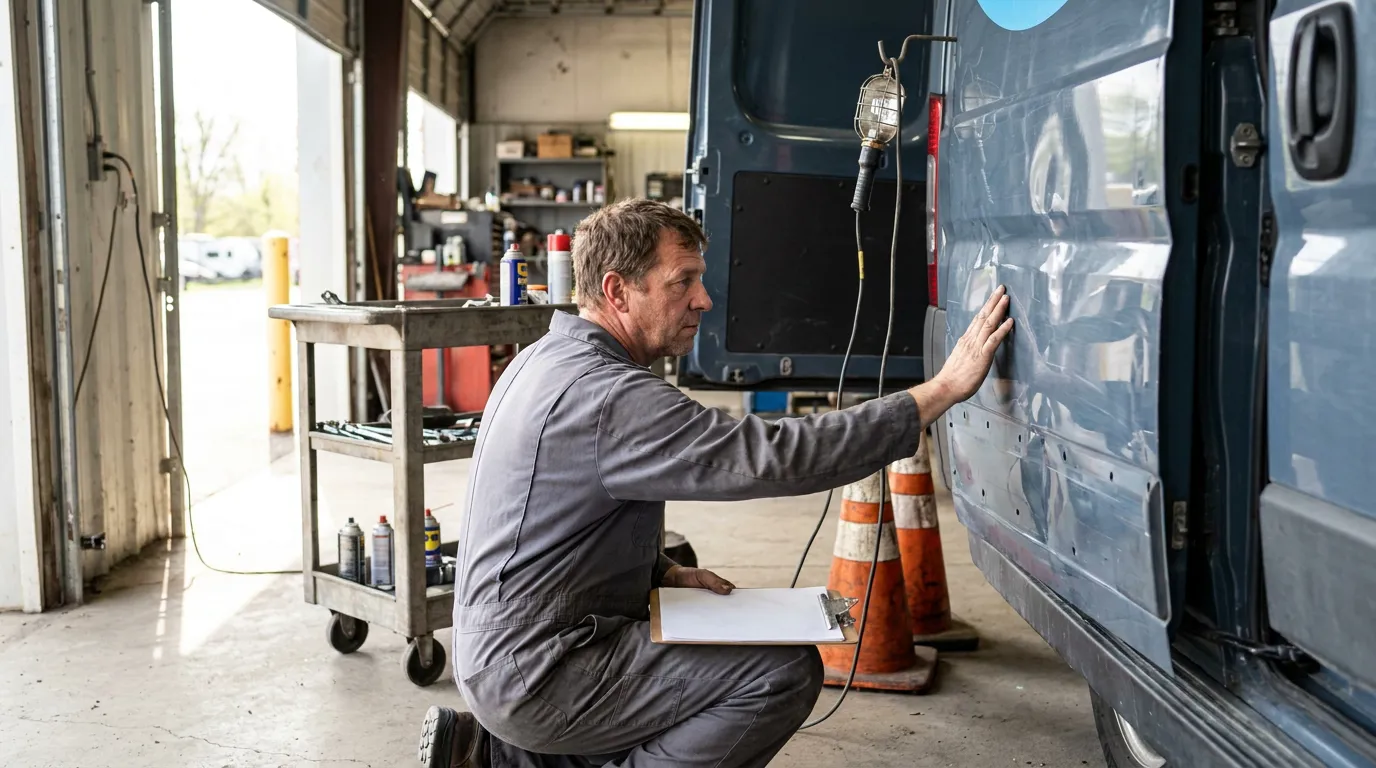
Who Actually Employs the Driver in an Amazon Delivery Truck Accident?
The first question in any lawsuit against Amazon is who the driver worked for when the crash happened. Each delivery channel raises its own legal issues.
Delivery Service Partner Drivers
DSPs, which are independent businesses that contract with Amazon, run most blue Amazon-branded vans. In many cases, the DSP employs the driver directly. Under Indiana law, an employer can be held liable for crashes its employees cause while doing their jobs, a rule lawyers call respondeat superior. An injured person may also look at whether Amazon controlled routes, delivery quotas, schedules, or safety rules closely enough to share responsibility. Amazon may also be liable for its own negligence. Courts decide these questions based on the facts, so proof of Amazon’s actual control can matter a great deal.
Amazon Flex Drivers
Amazon Flex drivers use their own vehicles, and Indiana law treats them differently. Under Ind. Code § 8-2.1-19.3-2, unless a written contract says otherwise, a driver for a delivery network company (DNC) is generally treated as an independent contractor and not an employee or agent, as long as the statute’s conditions are met. This default rule can make it harder to hold Amazon responsible for a Flex driver’s negligence. Still, the written-contract exception, a failure to meet the statute’s conditions, or the facts of a case may open other paths to recovery. Other sources can include any insurance the platform carries, the driver’s own insurance, and your uninsured or underinsured motorist coverage.
💡 Pro Tip: Take photos of any logos, DOT numbers, or company names on the van. DSP names often appear in small print near the doors and can help identify the right defendant.
How Vehicle Type Can Matter
The type of vehicle involved can also shape a delivery van claim. Title 9 of Indiana’s Motor Vehicle Code includes standard definitions, such as Ind. Code § 9-13-2-31. That classification, including federal weight limits, may affect which safety rules apply and how a lawyer builds a negligence case.
Why Naming Every Responsible Party Matters
Indiana’s fault rules make it important to identify every company that may have contributed to your injuries. Under Ind. Code § 34-51-2-8, when a case has more than one defendant, the jury assigns a percentage of fault to the injured person, each defendant, and any properly identified nonparty. Because Indiana has generally abolished joint and several liability in these cases, each defendant generally pays only its own share.
Defendants also often try to blame someone who is not in the lawsuit. Ind. Code § 34-51-2-14 lets a defendant argue that a nonparty caused some or all of the damages. For example, Amazon might blame the DSP, or the DSP might blame a maintenance vendor. Any fault assigned to a nonparty reduces what you can recover from the named defendants. You can read more in our guide on who can be held liable in commercial truck crashes.
| Potential Defendant | Possible Basis for Liability |
|---|---|
| Delivery driver | Direct negligence (speeding, distraction, unsafe turns) |
| DSP | Liability as the employer, careless hiring or training |
| Amazon | Control over the work, a contract-based relationship, or its own negligence |
| Maintenance vendor | Faulty repairs or brake and tire failures |
How Comparative Fault Affects Your Amazon Injury Claim
Indiana uses modified comparative fault, so you may still recover even if you were partly to blame. Under Indiana’s comparative fault statute, Ind. Code § 34-51-2-6, you are barred from recovering only if your fault is greater than the combined fault of everyone else who contributed to your damages. In practice, if you are found more than 50% at fault, you recover nothing. If you are found 20% at fault, your damages drop by 20%. The Comparative Fault Act does not apply to claims against government entities.
Insurance companies sometimes use this rule to argue that injured people share more of the blame than they do. Strong evidence helps you push back. Useful evidence can include:
- Photos and video of the scene, the vehicles, and your injuries
- The police crash report and witness contact information
- Medical records showing your diagnosis and treatment
- Vehicle tracking data, delivery route data, and the driver’s app activity
- Crash reconstruction analysis when the facts are in dispute
💡 Pro Tip: Amazon and DSPs may hold GPS and driver-monitoring data that can be erased over time. Sending a written request to preserve it early can help keep that evidence available.
Deadlines for Filing an Indiana Delivery Van Accident Lawsuit
In most cases, you have two years to file a lawsuit after a delivery van crash in Indiana. Under Ind. Code § 34-11-2-4(a), claims for personal injury and for damage to personal property, such as your car, generally must be filed within two years after the claim accrues. This generally applies whether you sue the driver, a DSP, or Amazon.
Exceptions for Minors and Others Under Legal Disability
Some injured people get more time, but the exceptions are limited. Under Ind. Code § 34-11-6-1, a person under a legal disability when the claim accrues, such as a minor or someone who is mentally incompetent, may generally file within two years after the disability ends. Courts may read these exceptions narrowly, and waiting can mean losing evidence. If a government vehicle was involved, the Indiana Tort Claims Act requires written notice much sooner, and the deadline depends on who you are suing: generally within 180 days after the loss for claims against a political subdivision, such as a city or county, but within 270 days after the loss for claims against the State of Indiana or a state agency. This notice deadline is separate from the statute of limitations.
Wrongful Death Claims After a Fatal Delivery Van Crash
When an Amazon delivery driver accident causes a death, Indiana law limits who can sue and what damages are available. Under Ind. Code § 34-23-1-1, only the personal representative of the person who died may bring the claim, and it generally must be filed within two years of the death. Damages can include reasonable medical, hospital, funeral, and burial costs, along with lost earnings. Any recovery beyond those costs and estate expenses goes to a surviving spouse, dependent children, or dependent next of kin.
Different rules apply when the person who died was an unmarried adult with no dependents. Under Ind. Code § 34-23-1-2, damages for loss of love and companionship are capped at $300,000 in total, not including medical, funeral, and burial expenses. The law does not allow damages for grief or punitive damages. A parent or child seeking loss-of-companionship damages must prove a genuine, substantial, and ongoing relationship with the person who died.
The Bigger Picture on Commercial Vehicle Crashes
Federal data shows that crashes involving commercial vehicles can cause serious harm. The Federal Motor Carrier Safety Administration (FMCSA) publishes state-by-state death figures and injury severity data for crashes involving large trucks, generally vehicles with a gross vehicle weight rating over 10,000 pounds. Some delivery vans fall into that group and some do not, so this data works best as general background. Talking with a lawyer who handles Amazon accident attorney Indiana lawyer cases can help you understand how these rules may apply to you.
Frequently Asked Questions
1. Can I sue Amazon directly if a Flex driver hit me?
You may be able to, but it can be hard. Under Ind. Code § 8-2.1-19.3-2, Flex drivers are generally treated as independent contractors if the statute’s conditions are met and no written contract says otherwise. Other insurance sources may still be available.
2. Is the DSP or Amazon responsible for a blue van crash?
It depends on the facts. The DSP often employs the driver, but Amazon may share responsibility depending on its control or its own negligence.
3. What if I was partly at fault?
Under Ind. Code § 34-51-2-6, you can still recover as long as your fault is not greater than the combined fault of everyone else. Any award would be reduced by your percentage of fault.
4. How long do I have to file a claim?
Generally two years under Ind. Code § 34-11-2-4(a). Limited exceptions, such as the one for minors under Ind. Code § 34-11-6-1, may apply. Claims involving government vehicles have much shorter notice deadlines, generally 180 days for a political subdivision and 270 days for the State of Indiana or a state agency.
5. What damages can I seek?
Injured people may seek money for medical bills, lost wages, property damage, and pain and suffering, depending on the facts. Wrongful death claims have different statutory damages.
Protecting Your Rights After an Amazon Delivery Truck Accident
Suing Amazon after a crash in Indiana is possible in some cases, but the result often depends on who employed the driver, how fault is divided, and how quickly evidence is preserved. Whether your claim involves a DSP van, a Flex driver, or a wrongful death, acting before the deadline is critical.
You do not have to figure out who is responsible on your own. Clients across Indianapolis trust Poynter & Bucheri with commercial vehicle injury claims. Call (317) 406-7443 or schedule your free consultation today.
Disclaimer: This content is for informational purposes only and is not legal advice. Every case is unique, and results may vary. Consult an attorney about your specific circumstances.