
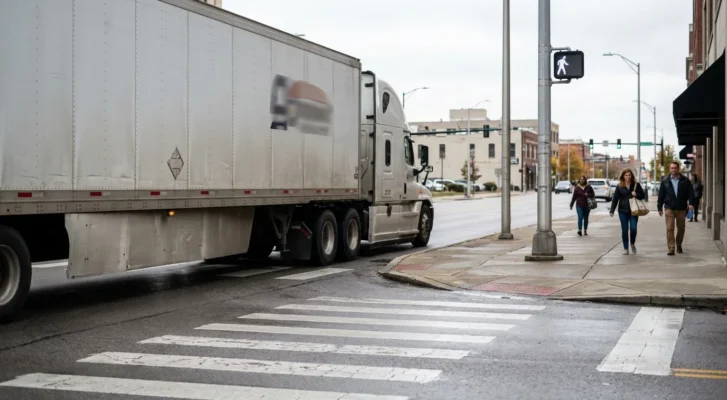
Can a Pedestrian Recover Damages After Being Hit by a Truck in Indianapolis?
Understanding Your Rights After a Pedestrian-Truck Collision in Indianapolis
Key Takeaways: Yes, a pedestrian hit by a truck in Indianapolis can often recover damages, even when partially at fault. Indiana follows a modified comparative fault system under IC 34-51-2, allowing injured pedestrians who are 50% or less at fault to recover reduced compensation. Fault is not automatically assigned to a jaywalker, since a truck driver who was speeding, distracted, or violating federal safety rules may bear the majority of blame. Indiana generally allows two years to file suit under IC 34-11-2-4, but insurance notice deadlines are far shorter. Claims involving government vehicles fall under the stricter Indiana Tort Claims Act (IC 34-13-3), which imposes notice deadlines of 180 to 270 days and applies the harsher contributory negligence standard. Preserving evidence early, such as electronic logging data, maintenance records, police reports, and surveillance footage, strengthens your claim.
Yes, a pedestrian can often recover damages after being hit by a truck in Indianapolis, even if they shared some blame for the crash. Indiana follows a modified comparative fault framework rather than the harsh contributory negligence rule that once barred recovery for any plaintiff who contributed to their injury. Under Indiana Code § 34-51-2-1, an injured pedestrian who is 50% or less at fault may still pursue compensation, though the amount is reduced by their share of responsibility.
If you were hurt while walking in Indianapolis, the team at Poynter & Bucheri is ready to review your situation. Call us at (317) 406-7443 or reach out through our confidential case review form to learn how Indiana law may apply to your claim.
💡 Pro Tip: Photograph the scene, get the truck’s DOT number, and request the police report as soon as possible. Truck-specific records like electronic logging data and maintenance files can disappear quickly if no one demands their preservation.

When a Truck Hits a Jaywalker, Who Is at Fault?
Fault is not automatically assigned to a pedestrian who crossed midblock or against a signal. Indiana courts apportion responsibility between parties based on evidence, meaning a truck driver who was speeding, distracted, or violating federal safety rules may still bear the majority of blame even when a pedestrian technically jaywalked.
Indiana Code Title 9 governs motor vehicles statewide, and its traffic regulation provisions under IC 9-21 set duties for both drivers and pedestrians. You can review the framework directly through the state’s official publication of Indiana motor vehicle statutes, which establishes the legal standards applicable to Indianapolis truck-pedestrian incidents.
Commercial trucks carry heightened responsibilities that frequently shift fault toward the driver or carrier. Truck operators must comply with federal hours-of-service limits, maintenance standards, and loading regulations. When a driver was fatigued, the vehicle was poorly maintained, or cargo was improperly secured, those failures can outweigh a pedestrian’s technical violation.
How Indiana’s Comparative Fault System Protects Injured Pedestrians
Indiana abandoned pure contributory negligence for most tort claims decades ago, adopting a more forgiving comparative fault model. The Comparative Fault Act was enacted in 1983 and took effect on January 1, 1985, replacing the old rule that barred any plaintiff who contributed even slightly to their injury. Notably, this comparative fault model does not apply to claims against governmental entities, which remain governed by the older contributory negligence rule.
The 51% Bar Rule and Reduced Recovery
Under Indiana’s modified system, recovery is available only when the injured party’s fault does not exceed 50%. IC 34-51-2-5 provides that contributory fault "diminishes proportionately the amount awarded as compensatory damages…but does not bar recovery except as provided in section 6." IC 34-51-2-6 then completely bars recovery if the claimant is found more than 50% at fault. A pedestrian found 20% responsible for a crash may recover 80% of their damages, while a pedestrian found 60% responsible generally recovers nothing under IC 34-51-2-6.
💡 Pro Tip: Insurance adjusters often try to inflate a pedestrian’s percentage of fault to push it past the 51% threshold. Avoid giving recorded statements before you understand how comparative fault Indiana rules could affect your compensation.
Why Fault Percentages Matter So Much
Because damages shrink as your fault percentage grows, how responsibility is allocated directly controls the value of a pedestrian truck accident Indiana claim. Preserving evidence early is critical. Surveillance footage, witness statements, the truck’s telematics, and the driver’s logs all influence how a jury or insurer views each party’s share of fault. Identifying every potentially liable party also matters, and you can learn more about who may be held responsible in a commercial truck crash when a driver, carrier, or shipper may share the blame.
Deadlines That Can Make or Break Your Claim
Indiana generally gives injury victims two years to file a personal injury lawsuit, and missing that deadline usually bars recovery entirely. This limitation period is set by IC 34-11-2-4 and applies to pedestrian-versus-truck claims in Indianapolis.
Several deadlines commonly interact in these cases:
- Civil lawsuit deadline: Two years from the injury under IC 34-11-2-4, subject to limited exceptions.
- Insurance notice deadlines: These are separate from and usually far shorter than the lawsuit deadline, with insurers often requiring notice within roughly 30 to 90 days.
- Government administrative claim deadlines: When a government vehicle or employee is involved, a much shorter notice requirement generally applies.
Certain circumstances may extend the filing window, but courts interpret these exceptions narrowly. For minor pedestrians, the limitations clock typically does not begin until the child turns 18. The discovery rule may, in limited circumstances, delay the start of the clock for injuries not immediately apparent, such as traumatic brain injuries diagnosed weeks after a collision. For a broader comparison of how filing periods differ across jurisdictions, this overview of the statute of limitations by state offers helpful context.
💡 Pro Tip: Treat the insurance notice deadline, not the two-year statute, as your most urgent clock. Prompt notice preserves your rights while your attorney investigates the longer court deadline.
| Deadline Type | Typical Timeframe | Source |
|---|---|---|
| Personal injury lawsuit | 2 years | IC 34-11-2-4 |
| Insurance claim notice | Often 30, 90 days | Policy terms |
| Government tort claim notice | 180 days (political subdivision) to 270 days (state) | IC 34-13-3 |
Special Rules When a Government Vehicle Is Involved
If the truck belonged to a government entity, such as a city bus, sanitation truck, or municipal vehicle, stricter procedures apply. Claims against a governmental entity or public employee are governed by the Indiana Tort Claims Act, IC 34-13-3, which imposes distinct notice requirements. Importantly, Indiana’s comparative fault statute does not apply to government defendants, so the stricter common-law contributory negligence rule generally governs, meaning even a small share of fault on the pedestrian’s part could bar recovery. An injured pedestrian typically must file an administrative notice within 180 days when the claim is against a political subdivision such as a city, and within 270 days when the claim is against the State of Indiana or a state agency.
These administrative notice requirements are separate from the civil lawsuit itself. Filing a tort claim notice is a prerequisite step, not a substitute for a court action, and failing to meet the shorter notice deadline can forfeit the right to sue a public entity.
Building a Strong Truck Accident Claim in Indianapolis
Recovering fair compensation after a truck accident Indianapolis pedestrians experience depends on proving negligence, causation, and compensable damages. Truck cases differ from ordinary car crashes because they involve federal regulations, corporate defendants, and specialized evidence.
Evidence That Strengthens Pedestrian Compensation in Indiana
Preserving the right documentation early often determines the strength of a claim. Key evidence commonly includes the driver’s electronic logging device data, maintenance and inspection records, the police crash report, surveillance or dashcam footage, and medical documentation tying injuries to the collision. Witness accounts and accident reconstruction can also help rebut an unfair fault allocation.
Because trucking companies and their insurers move quickly to protect themselves, having a knowledgeable truck accident lawyer Indianapolis residents trust can help level the playing field. A plaintiff-focused attorney can demand preservation of electronic records, negotiate with insurers, and build the case for maximum pedestrian compensation Indiana law allows.
💡 Pro Tip: Keep a written journal of your symptoms, medical appointments, and missed workdays. This contemporaneous record can strengthen your Indiana pedestrian injury claim for pain, suffering, and lost income.
Frequently Asked Questions
-
Can I still recover if I was jaywalking when the truck hit me?
In many cases, yes. Because Indiana uses comparative fault under IC 34-51-2, a jaywalker hit by a truck may recover reduced damages as long as their fault does not exceed 50%. The outcome depends on the specific facts, and note that a stricter standard applies if the truck was government-owned.
-
How long do I have to file a truck accident claim in Indianapolis?
Generally two years from the date of injury under IC 34-11-2-4. Some exceptions, such as the discovery rule or a victim’s minority, may apply in limited circumstances.
-
What if a city or government truck caused my injuries?
Shorter deadlines apply under the Indiana Tort Claims Act, IC 34-13-3. You typically must file an administrative notice within 180 days for a claim against a political subdivision or within 270 days for a claim against the state.
-
Does giving notice to the insurer replace filing a lawsuit?
No. Insurance notice deadlines are separate from and usually much shorter than the court statute of limitations. Prompt notice protects your rights, but it does not satisfy the requirement to file suit.
-
How is my compensation reduced if I share fault?
Your recovery is reduced in proportion to your percentage of fault. Under IC 34-51-2-5, a plaintiff who is partially responsible still recovers, but the award is diminished, and recovery is barred entirely under IC 34-51-2-6 if fault exceeds 50%.
Moving Forward After Your Injury
An injured pedestrian in Indianapolis can often recover meaningful compensation after a truck collision, even when fault is disputed. Indiana’s modified comparative fault system, its two-year statute of limitations, and the special rules for government vehicles all shape what your claim may look like. Because these outcomes are fact-dependent and deadlines can be unforgiving, understanding your rights early gives you the strongest opportunity to pursue fair pedestrian compensation Indiana law provides.
If you or a loved one was hurt by a truck, the attorneys at Poynter & Bucheri are prepared to help you evaluate your options. Call (317) 406-7443 today or complete our free consultation request to protect your rights before critical deadlines pass.