
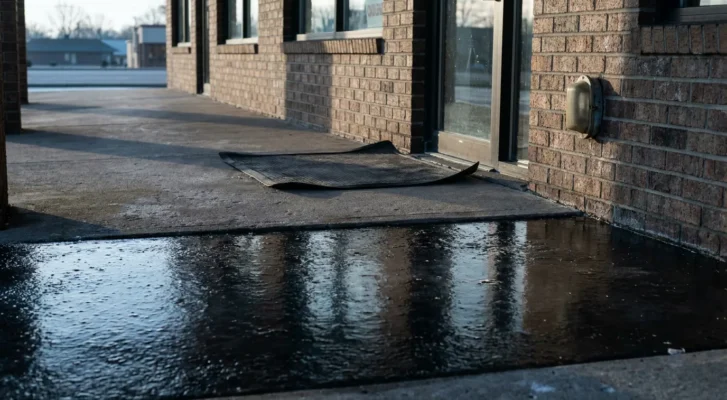
Why Indiana’s 51% Fault Bar Shapes 2026 Slip and Fall Recoveries
How Snow Removal Contractor Liability Indiana Rules Reshape Winter Fall Claims
Key Takeaways: Indiana applies a modified comparative fault rule with a 51 percent bar, so an injured visitor found 51 percent or more at fault recovers nothing, while one at 50 percent or less recovers an award reduced by their share. Property owners owe lawful visitors a substantial duty of care, far greater than the minimal duty owed to trespassers, but proving negligence still requires linking a specific breach to the injury. Under Indiana’s nonparty rule, an owner can shift blame onto an uninvolved snow removal contractor whose skipped treatment left ice on a walkway, placing that company’s fault on the verdict form even if it was never sued, so long as the owner properly pleads and specifically names it as a nonparty. Because evidence melts quickly, promptly documenting the hazard with photos, incident reports, maintenance logs, and witness details often lowers a plaintiff’s fault percentage and protects recovery. When an award is reduced for comparative fault, related medical liens and subrogation claims must shrink in the same proportion and share attorney fees. Every outcome remains fact-dependent, making early legal guidance and attention to deadlines essential.
Winter in central Indiana turns ordinary errands into risk, and the legal rules deciding who pays for an icy fall are drawing fresh attention heading into 2026. For anyone hurt on a slick parking lot, sidewalk, or apartment stairwell, fault allocation can mean the difference between meaningful recovery and walking away empty-handed. Understanding snow removal contractor liability Indiana standards early can help injured visitors protect their claims before evidence disappears.

Understanding Indiana’s Modified Comparative Fault Framework
Indiana follows a modified comparative fault rule with a 51 percent bar, controlling nearly every slip and fall dispute in the state. Under the Indiana Comparative Fault Act, a claimant may recover only if their own fault is not greater than 50 percent of the total fault involved. A plaintiff found 51 percent or more responsible is barred from any recovery, a rule codified in the statute governing the 51 percent fault bar in Indiana.
The chapter defines "fault" broadly to include negligence, willful conduct, and other bases of liability. This shapes how courts apportion responsibility between a property owner and an injured visitor. For a plaintiff at 50 percent or less, damages are reduced proportionally, so a 20 percent fault finding on a $100,000 claim yields $80,000.
Indiana’s approach is common but not universal. A national review of negligence rules, the Justia 50-state comparative negligence survey, sorts states into pure contributory negligence, pure comparative fault, and modified systems using either a 50 percent or a 51 percent bar. Indiana sits firmly in the 51 percent bar group, so the exact percentage a jury assigns can decide everything for claimants near that line. One exception: the Comparative Fault Act does not apply to tort claims against governmental entities, where common-law contributory negligence can still bar recovery.
The Duty Owners Owe To Lawful Visitors
Property possessors in Indiana generally owe lawful visitors a substantial duty of care, anchoring most slip and fall claims. Indiana law generally requires a possessor of land to refrain only from willfully or wantonly injuring a trespasser once discovered, illustrating how much higher the obligation runs toward customers, tenants, and invited guests. A shopper on a store lot or a tenant on an apartment walkway stands in a far stronger position than a trespasser.
Proving owner negligence still requires connecting a specific breach to the injury. This means showing an unsafe condition existed, that the owner knew or should have known about it, that reasonable care wasn’t taken, and that the hazard caused the harm. Indiana’s statutory scheme also preserves existing common-law duty-of-care standards rather than replacing them, keeping ordinary negligence principles available against owners and contractors alike, subject to exceptions.
A Slippery Morning In Indianapolis: A Hypothetical
Consider Diane, a 68-year-old Indianapolis retiree who slips on black ice outside a strip-mall pharmacy on a January morning. She fractures her wrist, misses weeks of part-time work, and faces mounting medical bills while the property manager’s insurer suggests she simply "wasn’t watching her step." This kind of blame-shifting is exactly how fault percentages get inflated against an injured person.
In Diane’s situation, the pharmacy hired an outside company to clear the lot, and that company skipped its scheduled morning treatment. Because Indiana juries weigh the fault of everyone who contributed to the harm, the contractor’s negligence can be placed on the verdict form even though it was never sued, provided the pharmacy affirmatively pleads and specifically names the contractor as a nonparty. If a jury assigns Diane 20 percent, the property owner 30 percent, and the contractor 50 percent, she stays below the bar and recovers a reduced award.
Proving Owner Negligence When Ice Is To Blame
Evidence tends to melt, so documenting the hazard quickly often shapes where the fault line falls. The strength of a winter fall claim frequently rises or drops based on what the injured person and their attorney preserve in the first hours and days. Insurers routinely argue that visitors should have avoided an obvious hazard, and thorough documentation is the most reliable answer.
Documenting The Hazard Before It Melts
Practical steps in the immediate aftermath can preserve the proof a claim depends on. Injured visitors, or a companion helping them, often benefit from gathering:
- Timestamped photos and video of the ice, snow, drainage, and lighting conditions
- The store or manager’s written incident report and the name of who prepared it
- Maintenance, salting, and snow-removal logs or contractor schedules
- Names and contact details of witnesses who saw the fall or the conditions
- Medical records tying the injury directly to the fall
Each item helps rebut the argument that a plaintiff bears most of the blame. Detailed records can move a fault allocation from 50 percent down toward a smaller share, directly changing recovery under the 51 percent bar. For a deeper look at why staying under that threshold matters, this firm’s discussion of whether you are less than 51 percent at fault walks through the stakes.
Nonparty Fault And The Uninvolved Contractor
Indiana lets defendants point to nonparties, which is central to snow removal contractor liability Indiana disputes. When a jury assesses percentages, it must consider the fault of all persons who contributed to the harm, regardless of whether they were named as a party. To place a contractor’s fault on the verdict form, the defendant bears the burden of affirmatively pleading a nonparty defense and specifically naming that contractor within the statutory time, while the plaintiff still must prove the defendant’s own fault caused the harm.
This nonparty rule can help or hurt an injured plaintiff depending on strategy. Naming and pursuing the contractor directly, rather than letting the owner use it as an empty chair, is often a tactical decision depending on the facts and available insurance. Because these determinations are fact-sensitive, injured visitors generally benefit from early legal guidance.
How Fault Percentages Cut Into Fall Injury Compensation
Once a jury sets fault, Indiana law reduces the award and every attached claim in the same proportion. The statute reduces a claimant’s compensatory damages by their contributory fault when that fault is 50 percent or less. This proportional reduction is the mechanical heart of how a verdict or settlement figure is finally calculated.
Liens And Attorney Fees Reduced In Proportion
When your recovery shrinks because of your fault share, related medical liens must shrink too. If a subrogation claim or other lien arose from payment of your medical expenses and your recovery is diminished by comparative fault, that lien is generally diminished in the same proportion. The lienholder must also bear a pro rata share of your attorney fees and litigation expenses, which meaningfully protects the injured person’s net recovery.
This provision often surprises clients who assume a health insurer takes the full lien off the top. Instead, a partially at-fault plaintiff generally keeps more of the settlement than a naive calculation suggests. Because lien negotiation and fault allocation interact in complex ways, and certain payers such as Medicare, Medicaid, and ERISA-governed plans may follow different rules, results vary case by case.
How Does This Impact Me?
These rules translate directly into practical questions injured Indianapolis residents ask every winter. The answers below are general and conditional, because outcomes depend on specific facts.
What Does The 51 Percent Bar Mean For My Claim?
It means your assigned fault percentage can decide whether you recover at all. If you are found 50 percent or less at fault, you recover damages reduced by that share, but at 51 percent or more you generally recover nothing. Keeping your percentage low is often the single most important battleground in a winter fall case.
Can The Property Owner Blame A Snow Removal Company?
Yes, and Indiana’s nonparty rule specifically allows it. An owner may argue that an outside contractor caused the icy condition, but it must affirmatively plead and specifically name that company as a nonparty to place its fault on the verdict form, even though the contractor was never sued. A careful investigation into contracts and service logs helps ensure responsibility lands where the evidence supports.
Will My Health Insurer Take My Entire Settlement?
Generally not, when your recovery has been reduced by comparative fault. Indiana law requires many liens and subrogation claims to be reduced in the same proportion as your award and to share in your attorney fees and costs. The exact math depends on the type of lien and the facts, so individual review is important.
How Long Do I Have To File A Slip And Fall Claim?
Indiana’s personal injury statute of limitations is generally two years, but exceptions are interpreted narrowly. Claims against government entities involve separate administrative notice deadlines that are often much shorter, and courts apply tolling or discovery exceptions only in limited circumstances. Because missing a deadline can end a claim, confirming your specific timeline early is critical.
What Should I Do Next?
Preserve evidence, seek medical care, and get guidance before speaking at length with an insurer. Documenting the scene, following through on treatment, and understanding your options position you well, whatever the facts show. You can learn more about how the firm approaches these matters as a snow removal contractor liability indiana lawyer.
Protecting Your Recovery As Winter Approaches
Indiana’s 51 percent fault bar quietly governs how much an injured visitor can recover after a winter fall, and 2026 premises liability disputes will turn on it again this season. The interaction of comparative negligence, nonparty fault, and proportional lien reductions means small differences in evidence can produce large differences in outcome. Injured people who document hazards, act within deadlines, and understand how fault is apportioned generally stand on firmer ground, though every case remains fact-dependent.
If a winter fall has left you facing medical bills and lost income, you do not have to sort through these rules alone. The team at Poynter & Bucheri is respected for handling slip and fall matters across Indianapolis and throughout Indiana and can help you understand your options. Call [(317) 406-7443]((317) 406-7443) or contact us today to discuss how these developments may affect your situation.