
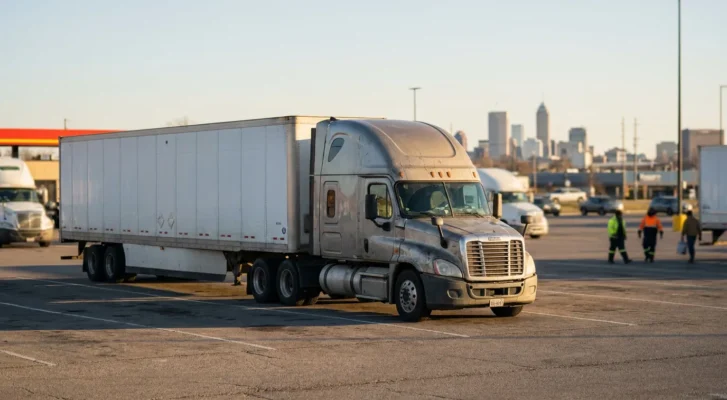
What Is an MCS-90 Endorsement in an Indianapolis Truck Accident Claim?
The Federal Insurance Safety Net Behind Indiana Semi-Truck Crashes
Key Takeaways: The MCS-90 endorsement (49 CFR § 387.15) obligates an insurer to pay certain final judgments for bodily injury or property damage caused by a carrier’s negligent operation, maintenance, or use of motor vehicles, even when the underlying policy denies coverage or the truck was never scheduled. It functions as public-protective suretyship backing federal financial responsibility minimums of $750,000 to $5,000,000 depending on cargo type. Its protections have real limits: generally no duty to defend the carrier, the insurer’s right to seek reimbursement, and application typically only to judgments against the named motor carrier or its fiduciary. Many courts treat it as a last resort triggering only when no other coverage responds. Because Indiana’s Comparative Fault Act and the Davidson one-lawsuit rule require identifying every responsible party early, naming the correct carrier can mean the difference between a paper judgment and a collectible one. Acting quickly on evidence preservation, medical documentation, and the two-year statute of limitations helps protect reachable coverage.
If a semi-truck driver hurt you on I-465 and the carrier’s insurer is pointing to exclusions or an unscheduled tractor, the MCS-90 endorsement may still put money on the table. The MCS-90 is the "Endorsement for Motor Carrier Policies of Insurance for Public Liability" at 49 CFR § 387.15, part of the Federal Motor Carrier Safety Administration’s financial responsibility rules. It is a federally prescribed promise that the insurer will pay certain final judgments for bodily injury or property damage caused by the carrier’s negligent operation, maintenance, or use of motor vehicles, even when the underlying policy would otherwise deny coverage.
If you need help determining which policy, endorsement, or filing might respond to your crash, the team at Poynter & Bucheri can help. Call (317) 406-7443 or request a free case review to discuss your options with an Indiana injury attorney.

Why Federal Law Requires Motor Carrier Financial Responsibility
Congress created these rules because interstate trucking companies once left catastrophically injured people with nothing to collect. The Motor Carrier Act of 1980 and its implementing regulations require covered interstate carriers to maintain and file proof of financial responsibility through an MCS-90 endorsement, an MCS-82 surety bond, or approved self-insurance. Most carriers rely on the MCS-90 endorsement.
The required amounts depend on what the truck was hauling and the carriage type. These federally mandated minimum levels from 49 C.F.R. §§ 387.1 through 387.9 are floors rather than ceilings, and many carriers purchase considerably more coverage.
| Type of Carriage | Federal Minimum |
|---|---|
| For-hire, nonhazardous property (GVWR 10,000+ lbs) | $750,000 |
| Oil and certain hazardous materials | $1,000,000 |
| Specified hazardous substances | $5,000,000 |
These minimums do not cap what an injured person may recover from responsible parties. They set the amount of financial responsibility a carrier must demonstrate to operate in interstate commerce. An MCS-90 endorsement responds only up to the applicable minimum limit stated on the form. Actual recovery depends on available policy limits, endorsement or bond limits, defendant assets, and evidence supporting damages.
How an MCS-90 Endorsement Truck Accident Claim Actually Works
The endorsement can obligate the insurer to pay final judgments against the carrier for negligence in the operation, maintenance, or use of motor vehicles, even when the specific vehicle was never scheduled on the policy. Courts, including the Northern District of Indiana in National American Insurance Co. v. Central States Carriers, Inc., 785 F. Supp. 793 (N.D. Ind. 1992), have recognized the endorsement as a public-protective payment obligation, noting that public policy calls for someone to pay when a member of the public is harmed by the trucking industry.
However, the modern trend narrows when the endorsement is triggered. Following Carolina Casualty Insurance Co. v. Yeates, 584 F.3d 868 (10th Cir. 2009) (en banc), many courts hold that MCS-90 obligations arise only when the underlying policy provides no coverage and other available insurance is insufficient to meet federal minimums. It generally operates as a last resort rather than a parallel source of recovery.
Limits Every Truck Crash Victim Should Understand
The MCS-90 is powerful, but not a blank check. Several well-established limitations shape how it fits into a case:
- It generally creates no duty to defend the motor carrier in the underlying lawsuit.
- The insurer may seek reimbursement from the carrier for any payment made solely because of the endorsement.
- FMCSA guidance states that Forms MCS-90 and MCS-82 are not intended to require an insurer to satisfy a judgment against any party other than the named carrier or its fiduciary.
That last point has real consequences for lawsuit structure. If your only judgment is against the driver individually, a broker, or a shipper, the endorsement on the carrier’s policy may not respond. Naming the correct motor carrier as a defendant is frequently the difference between a paper judgment and a collectible one.
Who Counts as the "Insured" Under the Endorsement
Under 49 CFR 387.5, "insured and principal" means the motor carrier named in the policy, surety bond, endorsement, or notice of cancellation, and also that carrier’s fiduciary. FMCSA has answered directly that the term "insured" on Form MCS-90 means the motor carrier named in the endorsement or surety bond. That interpretation, effective October 5, 2005, has been cited in trucking insurance disputes since.
💡 Pro Tip: Ask early whether the carrier’s filings with FMCSA show an MCS-90 endorsement, an MCS-82 bond, or self-insured status. That single answer often reshapes settlement strategy.
Vicarious Liability and Why the Carrier Must Be in the Case
Indiana courts may impute a driver’s negligence to the motor carrier that employs him when the driver was acting within the scope of employment or the carrier is otherwise responsible under agency or federal leasing principles. In one Lake County matter, the court imputed the driver’s negligence to J Trucking and apportioned all fault to the trucking company. That is an example of the posture in which an endorsement on the carrier’s policy could be implicated, because the judgment runs against the named carrier itself.
Sorting out who actually controlled the truck, the load, and the schedule takes documentary work. Driver qualification files, dispatch records, lease agreements, and electronic logging data often reveal relationships that the crash report never mentions. Our discussion of truck crash liability in Indianapolis walks through the range of parties who may share responsibility.
Indiana Comparative Fault and Why Parties Must Be Identified Early
Indiana’s Comparative Fault Act requires the factfinder to determine the percentage of fault of the claimant, the defendant(s), and any nonparties in a single proceeding; however, the total fault assigned to named parties may be less than 100% when nonparties are also at fault. Under Ind. Code §§ 34-51-2-7 and 34-51-2-8, fault is allocated in a single proceeding, and a claimant whose fault is greater than 50% of the total fault recovers nothing. Defendants bear the burden of pleading and proving nonparty defenses within statutory time limits. The Act does not apply to claims against governmental entities, which remain governed by common-law contributory negligence principles.
The Indiana Supreme Court has also tightened how claims involving governmental entities must be packaged. In Davidson v. State, No. 22S-CT-318 (Ind. June 21, 2023), the Court addressed a plaintiff’s obligation to pursue tort claims against government and non-government tortfeasors arising from the same incident in a single action. Splitting claims can risk preclusion of later recovery.
Deadlines compound that risk. Indiana’s general personal injury statute of limitations is two years under Ind. Code § 34-11-2-4, and claims against governmental entities carry separate administrative notice requirements under the Indiana Tort Claims Act, with notice generally due within 180 days for political subdivisions and 270 days for the State. Those tort claim notices are distinct from filing a civil lawsuit, and courts construe tolling and discovery exceptions narrowly.
💡 Pro Tip: Send an evidence preservation letter within days. Electronic control module data and dashcam footage can be overwritten long before a lawsuit is filed.
Practical Steps After a Commercial Truck Collision in Indianapolis
What you do in the first weeks often influences what coverage may be reachable later. A few measures consistently help:
- Get complete medical documentation, including follow-up care, not just the emergency room visit.
- Request the carrier’s USDOT number from the crash report so its FMCSA filings can be checked.
- Photograph placards, trailer markings, and any hazardous materials signage.
- Avoid recorded statements to the carrier’s adjuster before you understand the coverage picture.
Coverage disputes in trucking cases are technical, and outcomes turn on specific policy language, governing jurisdiction, and crash facts. Working with an Indianapolis truck accident claim attorney who understands FMCSA endorsement requirements can help ensure the right defendants are named before deadlines close.
Frequently Asked Questions
1. What is MCS-90 in simple terms?
It is a federally prescribed endorsement attached to a motor carrier’s liability policy (49 CFR § 387.15) that obligates the insurer to pay certain final judgments for public injury or property damage up to the applicable federal minimum, even when the policy itself might not cover the loss.
2. Does the MCS-90 mean the insurer must defend the trucking company?
Generally, no. The endorsement typically creates no duty to defend, and the insurer may seek reimbursement from the carrier for amounts paid solely because of the endorsement.
3. Can an MCS-90 pay a judgment against the truck driver personally?
Generally not. Per FMCSA guidance, the endorsement is not intended to require payment of a judgment against any party other than the named motor carrier or that carrier’s fiduciary, which is why naming the correct carrier matters.
4. Does the endorsement apply if the truck was not listed on the policy?
Potentially yes. The endorsement may reach negligence in the operation, maintenance, or use of motor vehicles even when the vehicle is not scheduled, though many courts trigger it only where no other coverage responds.
5. How much coverage does an Indiana semi-truck insurance filing have to show?
Federal minimums generally range from $750,000 for for-hire nonhazardous property to $5,000,000 for specified hazardous substances, subject to 49 C.F.R. §§ 387.1 through 387.9.
Bringing the Coverage Picture Into Focus
The MCS-90 is one of the few tools in trucking litigation designed specifically to protect the public rather than the insured business. It may reach unscheduled vehicles and fill gaps where an underlying policy fails, yet it carries meaningful limits: generally no duty to defend, reimbursement rights against the carrier, a cap at the applicable federal minimum, and application typically confined to the named motor carrier. Layer Indiana’s comparative fault framework and its single-action requirement for claims involving governmental defendants on top, and identifying every responsible party early becomes critical.
If a commercial truck crash has left you or a family member injured, do not let a coverage dispute decide your future. Reach out to Poynter & Bucheri at (317) 406-7443 or schedule your consultation today to have your claim reviewed by an Indiana truck accident attorney.
Disclaimer: This content is for informational purposes only and is not legal advice. Every case is unique, and results may vary. Consult an attorney about your specific circumstances.