
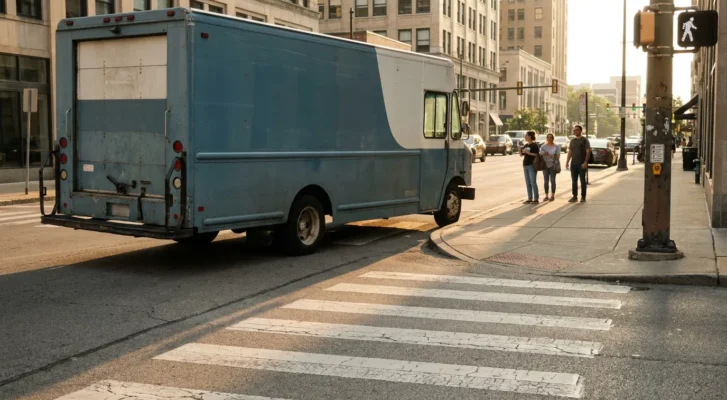
Is a Jaywalker Always at Fault When Hit by a Truck in Indiana?
Understanding Fault When a Truck Strikes a Pedestrian in Indianapolis
Key Takeaways: A jaywalker is not automatically at fault when struck by a truck in Indiana because the state uses a modified comparative fault system that assigns blame by percentage. An injured pedestrian can recover damages if they are not more than 50 percent at fault, though recovery is reduced by their share of responsibility. Truck drivers must exercise due care, so factors like speeding, distraction, or poor maintenance can place significant fault on the driver. Commercial trucks are far heavier and harder to stop, making collisions with pedestrians especially deadly. Liability may extend beyond the driver to employers, loaders, manufacturers, or government entities, though claims against government entities follow a stricter contributory negligence standard. Indiana generally allows two years to file a personal injury claim, but deadlines vary and are interpreted strictly.
No, a jaywalker is not automatically at fault when struck by a truck in Indiana. While crossing outside a crosswalk may shift some responsibility to the pedestrian, Indiana law rarely treats fault as all-or-nothing. Drivers must exercise due care, even when pedestrians are not in crosswalks. A truck driver who was speeding, distracted, or operating a poorly maintained rig can still bear significant or even primary legal responsibility. Determining liability requires examining both parties’ conduct, surrounding conditions, and scene evidence.
If you or a loved one suffered injuries in a pedestrian truck crash in Indianapolis, the team at Poynter & Bucheri is ready to help. Call us at (317) 406-7443 or reach our team online to discuss what happened and how Indiana law may apply.
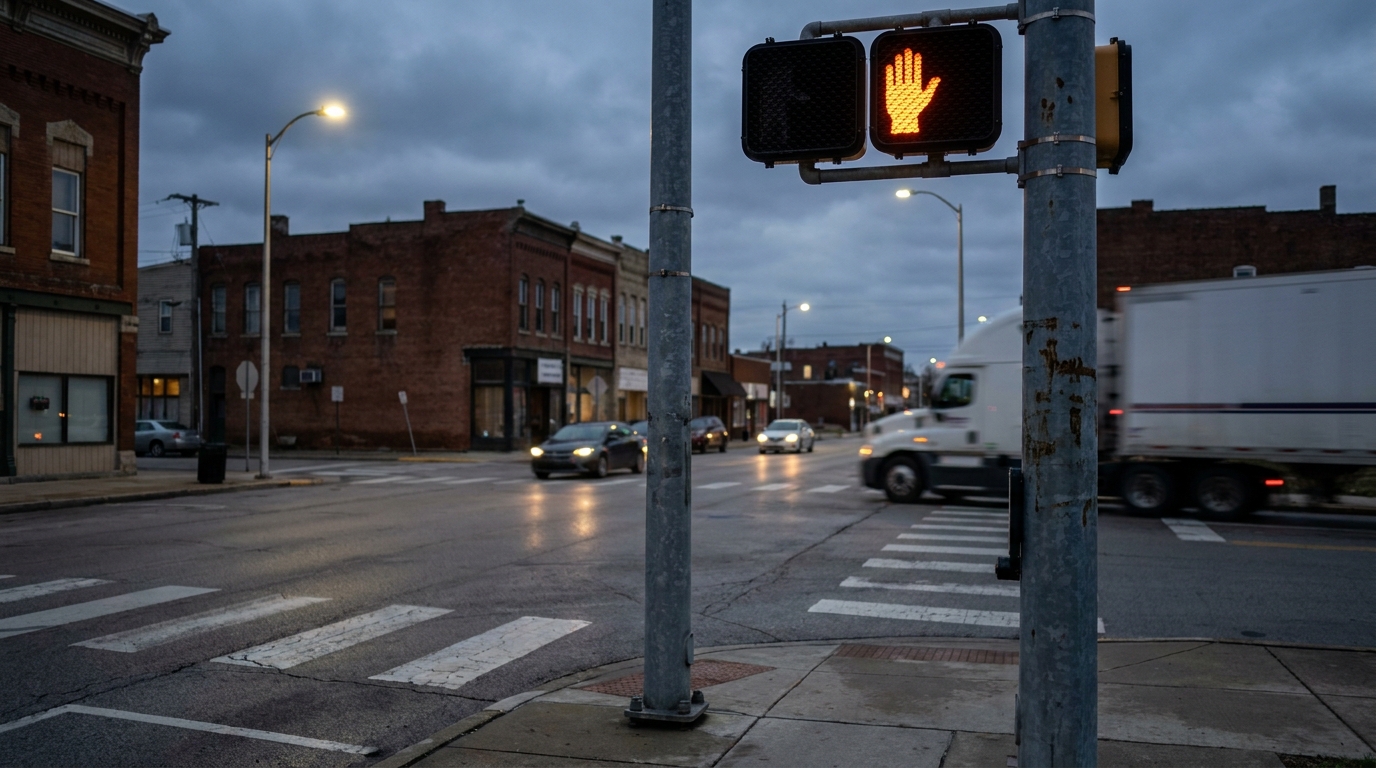
When a Truck Hits a Jaywalker, Who Is at Fault Under Indiana Law?
Indiana resolves fault through a system of shared responsibility rather than assigning blame to a single party. Fault is measured by percentages, and both the pedestrian and truck driver can carry a portion of blame. Indiana’s comparative fault rules allow injured pedestrians to recover compensation as long as they are not more than 50 percent at fault. Even a pedestrian who crossed mid-block may recover damages if the driver’s negligence contributed more substantially.
Under Indiana Code Title 34, specifically IC 34-51-2-5, contributory fault chargeable to the claimant diminishes proportionately the amount awarded as compensatory damages but does not bar recovery except as provided in section 6. In plain terms, jaywalking may reduce recovery but does not erase it. This comparative fault framework does not apply to claims against governmental entities, which instead follow the stricter common-law contributory negligence rule.
💡 Pro Tip: Even if a police report assigns you partial blame, that is not the final word. Investigators sometimes record initial impressions that later evidence contradicts, so preserve photos, witness names, and medical records early.
How Indiana’s Comparative Fault System Protects Injured Pedestrians
Indiana follows a modified comparative fault model with a clear cutoff point. This structure allows partially responsible pedestrians to recover up to a defined threshold. Understanding where that line falls is essential to evaluating any Indiana pedestrian accident claim.
The 51% Bar Rule Explained
Under IC 34-51-2-6(a), a claimant is barred from recovery if their contributory fault is greater than the fault of all persons whose fault proximately contributed to their damages. Practically, a jaywalker found 50 percent or less at fault may still recover, while one found 51 percent or more generally cannot. Because the difference between 50 and 51 percent can decide an entire case, how fault is documented and argued carries real weight.
When multiple parties are involved, the allocation becomes more detailed. Under IC 34-51-2-11, the court furnishes verdict forms requiring the jury to disclose the percentage of fault charged against each party and the amount of the verdict against each defendant. This transparency ensures fault is distributed according to evidence rather than assumption.
How Jaywalking Affects Your Claim
Jaywalking is a factor a jury may weigh, not an automatic disqualifier. Courts consider where the pedestrian crossed, visibility conditions, and whether the driver had time to react. Insurance companies often raise jaywalking accusations to reduce liability. However, even if a pedestrian made a mistake, that does not eliminate a driver’s responsibility. Outcomes depend on specific facts. The exception is claims against governmental defendants, where any degree of pedestrian fault can completely bar recovery.
💡 Pro Tip: Lighting matters more than many people realize. More than three-quarters of pedestrian fatalities occur after dark, and fatal pedestrian crashes at night rose 84% between 2010 and 2023. Noting the exact time and lighting conditions can be relevant to how courts weigh fault.
Why Trucks Are Especially Dangerous to Pedestrians
The sheer size of commercial trucks dramatically raises the stakes in any pedestrian collision. According to data on large truck safety, large trucks often weigh 20 to 30 times as much as passenger vehicles, making collisions with pedestrians especially deadly.
Stopping ability is another concern. Compared with passenger vehicles, stopping distances for trucks are much longer, particularly on wet roads or when brake systems are poorly maintained. These mechanical realities mean a truck driver’s choices about speed, following distance, and equipment upkeep can be central to a comparative fault truck accident analysis.
In 2023, more than 4,000 people died in crashes involving large trucks, and 17 percent of those deaths were pedestrians, bicyclists, or motorcyclists. Light trucks such as SUVs and pickups accounted for 54 percent of pedestrian fatalities where vehicle type was known in 2023.
💡 Pro Tip: Trucking companies are required to keep maintenance logs and electronic records. Acting quickly to request preservation of these documents can help establish whether a brake or equipment failure played a role.
Identifying Every Liable Party in a Pedestrian Truck Crash
Responsibility for a truck-pedestrian crash often extends beyond the person behind the wheel. Truck cases frequently involve multiple potentially liable parties, which can affect total compensation available.
Common parties to investigate include:
- The truck driver, for negligent operation such as speeding or distraction
- The trucking company or employer, for hiring, training, or maintenance failures
- A shipper or loader, when improper cargo loading contributed to the crash
- A parts manufacturer, when defective equipment is involved
- A government entity, when roadway design or signal failures played a role
Nationally, one in four pedestrian deaths results from a hit-and-run crash. When a driver flees, identifying the truck and carrier becomes a critical early task.
Evidence That Strengthens Your Case
Strong evidence is the foundation of any successful Indiana truck accident law claim. Because trucking companies and insurers often move quickly to protect their interests, injured pedestrians benefit from preserving proof early. Electronic logging device data, maintenance records, dashcam footage, surveillance video, and witness statements can all help reconstruct how the crash occurred. A detailed approach to handling truck-related collisions is described on the firm’s truck accident Indianapolis page.
If a government entity may share fault, a separate process applies. The City of Indianapolis offers a formal procedure to file a tort claim against the city. Under the Indiana Tort Claims Act, notice must generally be filed within 180 days for a claim against a political subdivision such as a city or county, and within 270 days for a claim against the State of Indiana. The Comparative Fault Act does not apply to these claims; instead, the common-law contributory negligence rule governs, meaning that if the injured pedestrian is found even slightly at fault, recovery against the government entity can be barred entirely. These administrative deadlines are interpreted strictly.
Common Defenses Insurers Raise
Insurers frequently rely on the pedestrian’s conduct to minimize what they pay. Anticipating these arguments helps injured people respond effectively. A deeper discussion appears in this overview of jaywalking fault in Indiana, which examines how shared responsibility is evaluated.
Protecting Your Right to Compensation After a Truck Accident
Acting promptly is one of the most important steps an injured pedestrian can take. Indiana generally applies a two-year statute of limitations for most personal injury claims, though specific deadlines depend on circumstances and any government involvement. Where a government entity is involved, a much shorter notice deadline applies, generally 180 days for a political subdivision and 270 days for the State, and missing it can bar the claim. Courts interpret exceptions to filing deadlines narrowly, and tolling or discovery rules apply only in limited circumstances.
| Pedestrian’s Fault | General Outcome Under Indiana Law |
|---|---|
| 50% or less | May recover damages, reduced by fault percentage |
| 51% or more | Generally barred from recovery |
Frequently Asked Questions
1. Can I still sue if I was jaywalking when a truck hit me?
Yes, in many cases you can. Indiana’s modified comparative fault system allows recovery as long as you are not more than 50 percent at fault. Whether you meet that threshold depends on the specific facts and how fault is allocated among all parties.
2. How is fault decided when multiple parties are involved?
A jury assigns a percentage of fault to each party. Under IC 34-51-2-11, verdict forms require disclosure of each party’s fault percentage and the verdict amount against each defendant, keeping the allocation transparent and evidence-based.
3. What if the truck driver fled the scene?
A hit-and-run does not necessarily end your claim. Investigators can sometimes identify the truck and carrier through video, witness accounts, and physical evidence. Preserving evidence quickly is especially valuable.
4. Does the city ever share responsibility for a crash?
Sometimes, yes. Government entities may share fault for poor road design, missing signage, or malfunctioning signals. Claims against the city follow a separate administrative process with shorter deadlines and are governed by the stricter contributory negligence rule, so even minor fault on your part can bar recovery against the government.
5. How long do I have to file a claim in Indiana?
Indiana generally allows two years for personal injury claims. However, deadlines vary based on facts and any government involvement. Claims against a government entity require tort claim notice within roughly 180 to 270 days, and exceptions are applied narrowly. Confirming your specific deadline early helps protect your rights.
Moving Forward After a Truck-Pedestrian Collision
A jaywalker is not automatically at fault when struck by a truck in Indiana. Indiana’s comparative fault framework, combined with the heightened dangers that large trucks pose, means fault is a nuanced question requiring careful analysis. By preserving evidence, identifying all liable parties, and understanding the 50 percent threshold, injured pedestrians can pursue fair recovery for medical bills, lost income, and pain and suffering.
If you are facing this situation, the team at Poynter & Bucheri is here to help you understand your rights. Call (317) 406-7443 today or request a consultation to take the next step toward protecting your future.