
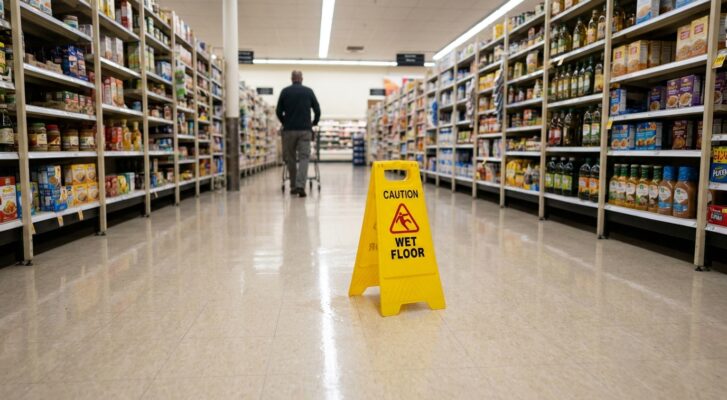
Can a Mooresville Store Be Liable for a Wet Floor Fall?
Yes, a Mooresville store can be held liable for a wet floor fall, but only if you can establish negligence. Simply falling inside a business does not automatically entitle you to compensation. You must show the store knew or should have known about the hazardous condition and failed to act. Under premises liability law, stores have a duty to keep their property reasonably safe for customers. If a wet floor, spill, or other dangerous condition caused your fall and the store did nothing to address it, you may have grounds for a claim. Understanding how Indiana law handles these cases can help you protect your rights and pursue deserved compensation.
If you suffered a wet floor injury in Mooresville or anywhere in Indiana, Poynter & Bucheri can help you understand your options. Call (317) 406-7443 or reach out online to discuss your situation.
How Premises Liability Works in Indiana
Premises liability is the legal framework that holds property owners responsible when unsafe conditions on their property injure someone. In Indiana, store owners owe a duty of care to customers who enter their premises. This means they must take reasonable steps to identify and address hazards. When a store fails to fix or warn about a dangerous condition like a wet floor, and someone gets hurt as a result, the injured person may pursue a claim for damages.
Indiana’s fault-based system for personal injury claims is governed by Title 34 of the Indiana Code. IC 34-51-2-1(a) states that the chapter governs any action based on fault brought to recover damages for injury or death to a person or harm to property. This statute controls slip-and-fall premises liability claims across the state, including those in Mooresville stores.
What a Store Must Do to Keep You Safe
Stores are expected to regularly inspect their premises, clean up spills promptly, and place warning signs near known hazards. A store can be held liable if it knew or should have known about a hazard and failed to remove the danger or minimize potential harm. Common hazards that lead to wet floor fall claims include:
- Water, food products, cleaning solutions, or other substances on the floor
- Merchandise, equipment, wires, or tools left in customer walkways
- Torn carpet, broken tiles, or uneven flooring
- Poor or inadequate lighting in high-traffic areas
💡 Pro Tip: If you fall in a store, immediately ask an employee or manager to create an incident report. This document can become critical evidence if you later pursue a claim.

Proving Negligence in a Wet Floor Fall Case
Just because you fall on a business owner’s property does not automatically mean you have a valid claim. To build a successful case, you must prove four elements: the store owed you a duty of care, the store breached that duty, the breach caused your fall, and you suffered actual damages.
Establishing the Store’s Knowledge of the Hazard
One of the most important parts of a slip and fall case is showing the store had notice of the dangerous condition. Notice can be "actual," meaning an employee knew about the spill, or "constructive," meaning the hazard existed long enough that a reasonable business should have discovered and addressed it. Surveillance footage, employee schedules, and maintenance logs can all help establish this timeline.
💡 Pro Tip: Photograph the hazard, your injuries, and the surrounding area immediately after a fall. Include timestamps on your photos and note the names of any witnesses.
The Role of Evidence in Your Claim
Strong evidence can make or break a grocery store fall claim or any commercial property fall in Indiana. Collect as much documentation as possible right away. Medical records linking your injuries to the fall, photographs of the scene, witness statements, and the store’s incident report all serve as building blocks for your case. The sooner you begin gathering evidence, the stronger your position when dealing with the store’s insurance company.
Indiana’s Comparative Fault Rules and Your Recovery
Indiana follows a modified comparative fault system, which means your own actions during the fall matter. Under IC 34-51-2-5, any contributory fault on your part reduces your compensatory damages proportionally. For example, if a court determines you were 20% at fault for texting while walking, your award would be reduced by 20%.
However, there is a critical threshold you must stay below. IC 34-51-2-6 establishes the 51% bar rule. If your contributory fault is greater than the fault of all persons whose fault proximately contributed to your damages, you are completely barred from recovery. This makes it essential to document the store’s negligence thoroughly and avoid any actions that could inflate your share of fault.
| Claimant’s Fault | Effect on Recovery |
|---|---|
| 0% | Full compensation awarded |
| 1%, 50% | Compensation reduced by claimant’s percentage of fault |
| 51% or greater | Completely barred from any recovery |
💡 Pro Tip: Insurance adjusters may try to get a recorded statement from you shortly after your fall. Be cautious about what you say, as your words can be used to argue you were largely at fault.
How Stores and Their Insurance Respond to Fall Claims
When a customer is injured, the store’s general liability or commercial liability insurance policy typically covers the incident. However, getting fair compensation from an insurer is rarely straightforward. Insurance companies often minimize payouts or dispute the severity of injuries. A lawsuit remains a possibility if negotiations stall or produce an inadequate offer.
Another tactic stores may use involves shifting blame to a third party. Under IC 34-51-2-14, a defendant may assert that a nonparty, such as a cleaning contractor or maintenance company, contributed to the claimant’s damages. This can reduce the store’s share of liability. If a store raises this defense, your attorney will need to investigate the roles of all parties involved to protect your claim.
For additional guidance on slip and fall injuries and how these claims work, understanding the process early gives you a meaningful advantage.
Why Wet Floor Falls Can Be More Serious Than You Think
Slip and fall accidents frequently result in injuries far more severe than people expect. According to the CDC, falls are the most common cause of traumatic brain injuries. Even a seemingly minor fall on a wet grocery store floor can lead to concussions, broken bones, back injuries, or chronic pain requiring months of treatment.
The statistics underscore how common and dangerous these incidents are. Roughly 18% of the over 1 million nonfatal work injuries resulting in days away from work in 2020 were related to slips, trips, and falls. Fall-related data from the CDC shows approximately 3 million emergency department visits each year among older adults. About one out of four older adults falls each year, and falling once doubles the chances of falling again.
💡 Pro Tip: Even if you feel fine immediately after a fall, see a doctor within 24 to 48 hours. Some injuries, like concussions or soft tissue damage, may not show symptoms right away but can worsen over time.
Finding a Slip and Fall Attorney in Mooresville, IN
Navigating a wet floor fall liability claim in Indiana without legal guidance can put your recovery at risk. An experienced slip and fall attorney in Mooresville, IN can evaluate your case, handle communication with the store’s insurance company, and build a strategy based on your situation. From preserving key evidence to calculating the full scope of your damages, including medical bills, lost wages, and pain and suffering, legal counsel can make a significant difference in the outcome.
You can learn more about protecting your rights by exploring our legal blog for additional resources. Every case is different, and outcomes depend on specific facts, so getting personalized guidance is important.
💡 Pro Tip: Indiana’s statute of limitations sets a deadline for filing personal injury claims. Missing this deadline generally means losing your right to sue, so consult an attorney as soon as possible after your injury.
Frequently Asked Questions
1. Do I automatically have a claim if I slip on a wet floor in a Mooresville store?
No. Simply falling on a store’s property does not create an automatic right to compensation. You must establish that the store was negligent, meaning it knew or should have known about the wet floor and failed to clean it up or warn customers. Without evidence of negligence, a claim is unlikely to succeed.
2. What if I was partially at fault for my fall?
Indiana’s modified comparative fault system under IC 34-51-2-5 allows you to recover damages even if you share some blame, as long as your fault does not exceed 50%. Your compensation will be reduced proportionally to your share of fault. If you are found 51% or more at fault, you are barred from recovering anything.
3. Can the store blame a cleaning company for my injury?
Yes. Under IC 34-51-2-14, a store may assert that a nonparty such as a cleaning contractor caused or contributed to your damages. This defense can reduce the store’s share of liability. Your attorney can investigate whether this claim has merit and pursue all responsible parties.
4. What types of compensation can I seek after a wet floor fall?
You may be able to recover compensatory damages including medical expenses, lost wages, rehabilitation costs, and pain and suffering. The specific amount depends on the severity of your injuries, the strength of the evidence, and the degree of fault assigned to each party.
5. How soon should I act after a slip and fall in a store?
As soon as possible. Evidence like surveillance footage may be overwritten, witnesses may forget details, and Indiana imposes filing deadlines that courts interpret strictly. Early action helps preserve your claim and strengthens your position.
Protect Your Rights After a Store Fall in Mooresville
A wet floor fall in a Mooresville store can leave you facing unexpected medical bills, time away from work, and lasting pain. Indiana law provides a path to compensation when a store’s negligence causes your injuries, but building a strong claim requires prompt action, solid evidence, and a clear understanding of comparative fault rules. Every case turns on its own facts, and the legal process involves nuances that can significantly affect your outcome.
If you or a loved one was injured in a slip and fall accident, Poynter & Bucheri is ready to help you evaluate your claim. Call (317) 406-7443 or contact us today to get started.