

What Is Premises Liability in an Indianapolis Slip and Fall Case?
Premises liability is the legal principle that holds property owners responsible when unsafe conditions on their property cause injuries to visitors. If you slipped and fell in an Indianapolis grocery store, parking lot, restaurant, or apartment complex, Indiana premises liability law may entitle you to compensation for your medical bills, lost wages, and pain and suffering. Understanding this area of law is essential to protecting your rights and building a strong claim. Indiana follows specific statutes and court decisions that shape how fault is determined, what duties property owners owe, and what defenses may be raised.
If you were injured in a slip and fall accident and need guidance on your legal options, Poynter & Bucheri can help. Call (317) 406-7443 or reach out online to discuss your case today.
How Indiana Law Defines Premises Liability
Premises liability in Indiana centers on the duty a property owner owes to people who enter their property. Under traditional Indiana premises liability principles, and as established in Burrell v. Meads, 569 N.E.2d 637, 639-40 (Ind. 1991), a landowner owes invitees the highest duty of care — to exercise reasonable care for their protection. Pursuant to Restatement (Second) of Torts § 343 (adopted in Burrell), a landowner is liable if they know or should discover a dangerous condition, should expect invitees will not discover or protect themselves from it, and fail to exercise reasonable care to protect them. The open-and-obvious doctrine is a defense available to landowners; generally landowners are not liable for hazards that are open and obvious to a reasonable invitee, unless the landowner should have anticipated harm despite the hazard’s obviousness.
Indiana statutes also establish specific rules for certain property types and organizations. For example, Indiana Code Title 34, Article 31 addresses immunities and liability limitations, including premises liability of religious organizations. Under IC § 34-31-7-2, for premises owned, operated, or controlled by a nonprofit religious organization and used primarily for worship services, the organization owes persons who enter with actual or implied permission two duties: (1) to warn of hidden dangers of which a representative has actual knowledge, and (2) to refrain from intentionally harming the person. For persons who enter without actual or implied permission, the organization owes only the duty to refrain from intentionally harming the person. These provisions illustrate how Indiana law adjusts a property owner’s duty based on premises type and visitor status.
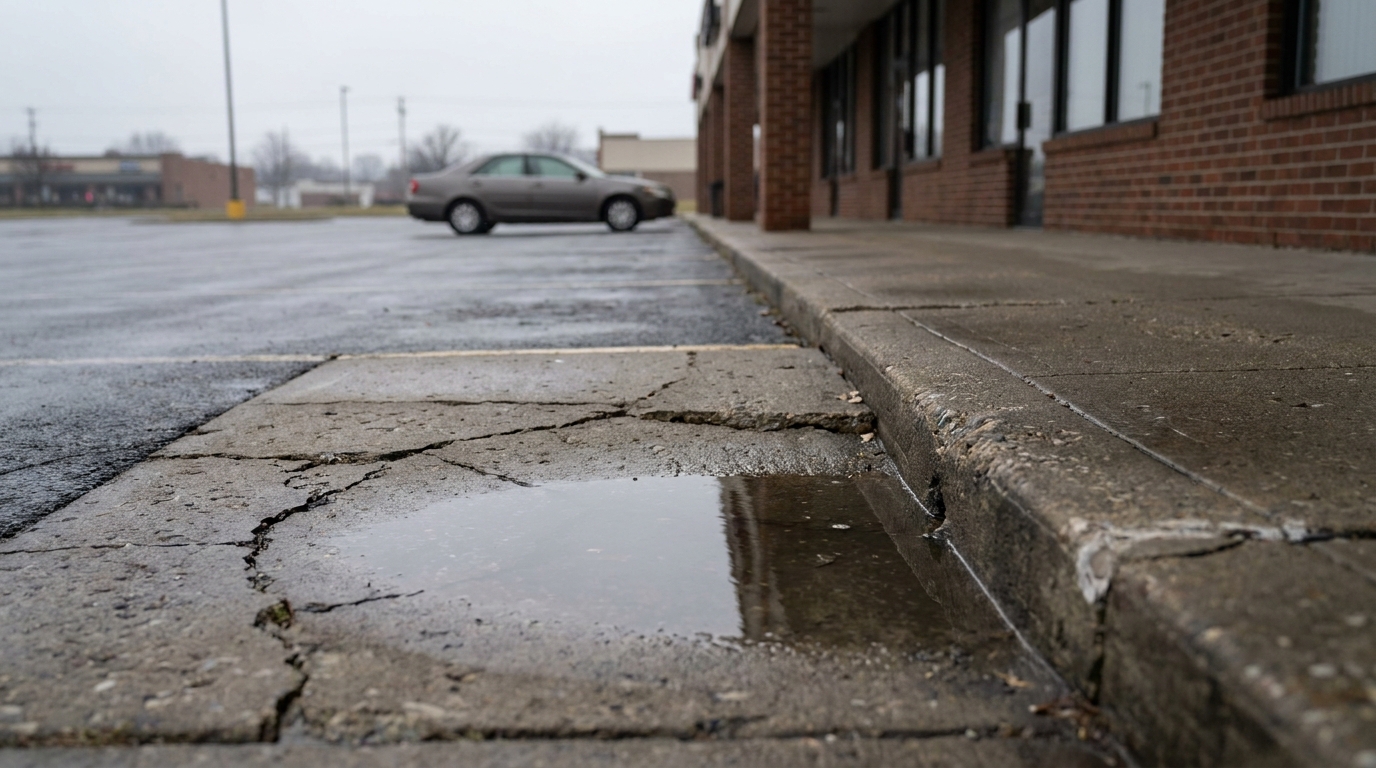
💡 Pro Tip: After a slip and fall, photograph the exact hazard that caused your injury before it gets cleaned up or repaired. Timestamped photos from your phone can serve as powerful evidence of the dangerous condition.
What You Must Prove in a Slip and Fall Claim in Indiana
To pursue a premises liability claim in Indiana, you generally need to establish four key elements:
- Duty of care: The property owner owed you a duty to maintain safe conditions.
- Breach: The owner failed to address or warn about a known or discoverable hazard.
- Causation: The hazardous condition directly caused your fall and resulting injuries.
- Damages: You suffered actual harm, such as medical expenses, lost income, or pain and suffering.
The duty of care owed depends on your visitor status. Indiana law distinguishes between invitees (customers, tenants, guests), licensees (social visitors), and trespassers. Invitees receive the highest protection, while trespassers are generally owed only the duty to refrain from willfully or wantonly injuring them after their presence is discovered under IC § 34-31-11-3. (IC § 34-31-7-2 applies specifically to premises owned, operated, or controlled by nonprofit religious organizations used primarily for worship services.)
💡 Pro Tip: Request a copy of any incident report filed at the location where you fell. Businesses often document these events internally, and that report can become critical evidence in your claim.
How Comparative Fault Affects Your Slip and Fall Attorney in Indianapolis, IN
Indiana follows a modified comparative fault system that directly impacts your compensation. Under IC § 34-51-2-5, any contributory fault on your part reduces your compensatory damages proportionately. For instance, if a jury finds you 20% at fault for not watching where you were walking, your total award would be reduced by 20%.
The critical threshold is the 51% bar rule. Under IC § 34-51-2-6, a claimant is completely barred from recovery if their contributory fault is greater than the fault of all persons whose fault proximately contributed to their damages. If you are found more than 50% at fault, you recover nothing. At exactly 50% fault, you may still recover a reduced award.
| Fault Assigned to You | Effect on Your Recovery |
|---|---|
| 0% | Full compensation awarded |
| 1%-50% | Damages reduced by your percentage of fault |
| 51% or greater | Completely barred from any recovery |
Defendants may also shift blame to other parties. Under IC § 34-51-2-14, a defendant may assert that a nonparty caused all or part of your damages. This tactic can dilute the fault assigned to the named defendant and reduce your total recovery, making it important to identify every potentially responsible party early.
💡 Pro Tip: Keep a written journal of your symptoms, limitations, and medical visits starting the day of your fall. This record helps establish the full scope of your injuries and counters any argument that your damages were minimal.
The Role of Res Ipsa Loquitur in Indianapolis Slip and Fall Cases
In certain premises liability cases, Indiana law allows injured plaintiffs to rely on a doctrine called res ipsa loquitur. This Latin phrase means "the thing speaks for itself," and it may apply when the circumstances strongly suggest negligence even without direct proof of what went wrong.
When Does Res Ipsa Loquitur Apply?
Indiana courts permit res ipsa loquitur where the injuring instrumentality is a fixture and the incident would not normally occur absent negligence. To invoke this doctrine, a plaintiff must show: (1) the injuring instrumentality was under the exclusive management and control of the defendant, and (2) the accident is one that does not ordinarily happen if proper care is exercised, as outlined in Shull, 477 N.E.2d at 927.
How the 2025 Isgrig Decision Changed the Analysis
The Indiana Supreme Court’s 2025 decision in Isgrig v. Trustees of Indiana University clarified an important point for slip and fall plaintiffs. The court held that a plaintiff invoking res ipsa loquitur in a premises liability case does not need to first establish traditional elements like proving the landowner had actual or constructive knowledge of a defect. This 2025 Indiana Supreme Court ruling represents the current state of Indiana premises liability law and may provide an alternative path forward when direct evidence of the property owner’s knowledge is limited.
💡 Pro Tip: If a fixture or permanent structure on the property caused your injury, such as a loose handrail, falling shelf, or broken stair, ask your attorney about whether res ipsa loquitur could strengthen your claim.
Why Property Owner Negligence in Indianapolis Can Be Hard to Prove
One of the biggest challenges in a slip and fall claim is demonstrating that the property owner knew or should have known about the dangerous condition. Property owners and insurers commonly argue they had no notice of the hazard, that the condition was open and obvious, or that the injured person was not paying attention. These issues can arise in various contexts, including shopper slip falls involving third-party delivery services.
Acting quickly after a fall significantly improves your chances of success. Maintenance logs, surveillance footage, and witness statements can disappear within days. Requesting preservation of security camera footage in writing, gathering witness contact information, and seeking immediate medical treatment all help build a solid evidentiary foundation. Learning more about Indiana’s premises liability law can help you understand what to expect.
How an Indianapolis Slip and Fall Lawyer Strengthens Your Case
An experienced slip and fall attorney in Indianapolis understands how to gather and present evidence needed to overcome common defense tactics. From obtaining maintenance records and surveillance footage to consulting with medical professionals about your injuries, legal representation can make a meaningful difference.
Indiana’s comparative fault rules under IC § 34-51-2 make legal guidance particularly valuable. Having someone who can anticipate fault-shifting arguments and build a clear narrative of the property owner’s negligence may help protect your right to recovery.
💡 Pro Tip: Do not provide a recorded statement to the property owner’s insurance company before consulting with an attorney. These statements are often used to establish contributory fault and reduce or deny your claim.
Frequently Asked Questions
1. How long do I have to file a slip and fall claim in Indiana?
Indiana generally imposes a two-year statute of limitations for personal injury claims under IC § 34-11-2-4. However, certain exceptions or tolling provisions may apply depending on circumstances. You should not assume additional time is available without verifying with an attorney.
2. What if I was partially at fault for my slip and fall?
You may still recover compensation as long as your fault does not exceed 50%. Under IC § 34-51-2-5, your damages are reduced in proportion to your share of fault. If your contributory fault exceeds 50%, IC § 34-51-2-6 bars you from any recovery.
3. Can I file a claim if I slipped on a public sidewalk in Indianapolis?
Claims against government entities involve different rules and shorter deadlines. Indiana’s Tort Claims Act imposes specific notice requirements separate from the standard civil statute of limitations. Additionally, Indiana’s comparative fault chapter does not apply to tort claims against governmental entities under IC § 34-51-2-2. Failing to meet administrative deadlines can prevent you from pursuing your case.
4. What types of damages can I recover in a premises liability case?
Compensable damages may include medical expenses, lost wages, diminished earning capacity, and pain and suffering. The exact amount depends on the severity of your injuries and case facts. Courts and juries evaluate damages case-by-case.
5. Does the property owner have to have known about the hazard?
Generally, yes. Traditional Indiana premises liability requires showing the landowner knew or should have known about the dangerous condition. However, under the res ipsa loquitur doctrine as clarified in the 2025 Isgrig decision, a plaintiff proceeding on that theory where the injuring instrumentality is a fixture does not need to first establish the defendant had actual or constructive knowledge of the defect.
Protecting Your Rights After a Slip and Fall in Indianapolis
Premises liability cases in Indianapolis involve detailed analysis of property owner duties, your visitor status, comparative fault rules, and available legal doctrines. Indiana’s modified comparative fault system under IC § 34-51-2 means every percentage point of fault matters, and the evidence you gather after your fall can shape your case outcome. Understanding your legal rights is the first step toward fair compensation.
The team at Poynter & Bucheri is ready to review your slip and fall case and help you understand your options. Call (317) 406-7443 or contact us today to schedule a consultation.