

Are Invited Social Guests Considered Invitees Under Indiana Law?
When a Friend’s Invitation Turns Into an Injury Claim
Key Takeaways: Generally, yes. Under Burrell v. Meads, 569 N.E.2d 637 (Ind. 1991), Indiana generally treats invited social guests as invitees, so property owners generally owe them reasonable care to protect against dangers they know about or would discover with reasonable care. Invitee status can be limited to the areas the invitation reasonably covered, and you must still prove duty, breach, causation, and damages. Some statutes override the usual rule, including the recreational vehicle immunity law and the Lake Michigan beach access law. Comparative fault can reduce your recovery and generally bars it if your share of fault is more than 50%. Different rules apply to government defendants. Most claims must be filed within two years, and claims against government entities have much shorter notice deadlines.
If you were hurt at a friend’s or relative’s home in Indiana after they invited you over, Indiana law generally treats you as an invitee, not a licensee. In Burrell v. Meads, 569 N.E.2d 637 (Ind. 1991), the Indiana Supreme Court held that an invited social guest is an invitee. That generally means the owner owed you the highest duty Indiana premises law gives visitors: reasonable care to protect you while on the property. The ruling has limits and exceptions, though. Recovery still depends on the facts, on proving negligence, and on filing before the deadline.
You do not have to work out your visitor status on your own. Poynter & Bucheri helps injured Indiana residents determine what duty a property owner owed them and what evidence can prove the owner failed to meet it. Call (317) 406-7443 or contact us now to talk about what happened.
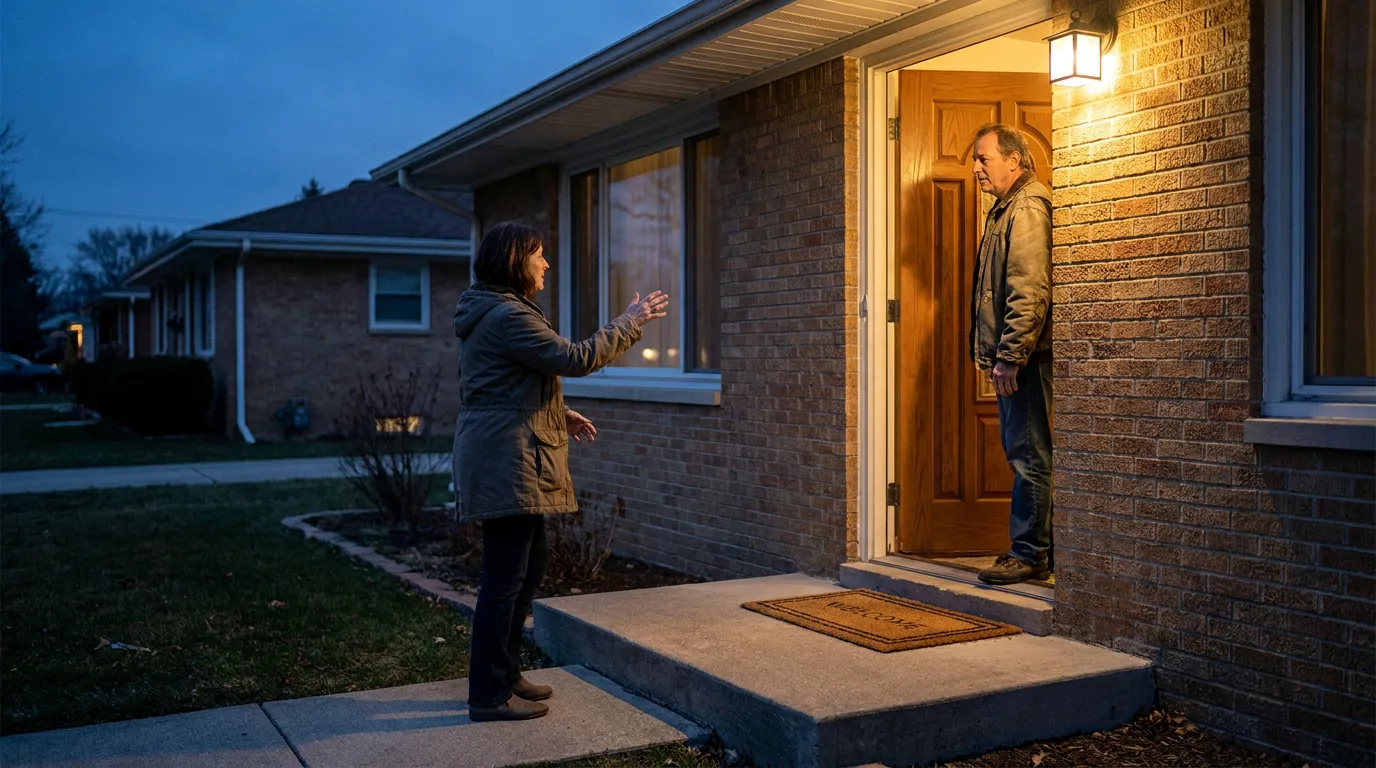
Invitee vs Licensee vs Trespasser: The Three Visitor Categories
Indiana courts sort people who enter land into three groups, and each is owed a different duty. Your category often decides whether the owner had any legal duty to fix or warn you about the hazard that hurt you.
| Visitor Status | Who Typically Qualifies | Duty Owed by the Possessor |
|---|---|---|
| Invitee | Customers, business visitors, and invited social guests (under Burrell) | Reasonable care to protect against dangers the possessor knows about or would discover with reasonable care |
| Licensee | People on the land with permission but without an invitation | Generally, to avoid willful or wanton injury, to avoid increasing the licensee’s peril, and to warn of known hidden dangers |
| Trespasser | People on the land without permission | Generally, only to avoid willfully or wantonly injuring the trespasser after discovering them (with a limited exception for children) |
The trespasser rule comes from statute. Under Ind. Code § 34-31-11-3(a), a possessor of land owes a trespasser no duty of care "except to refrain from willfully or wantonly injuring the trespasser" after discovering them. You can read the Indiana trespasser liability statute yourself. Because that standard is so much lower than the invitee duty, your status can decide the whole case.
The Exception for Child Trespassers
Indiana makes an exception for children, often called the attractive nuisance rule. Under Ind. Code § 34-31-11-3(b)(1)-(6), a possessor may be liable for a child trespasser’s injury or death only if all six of these conditions are met:
- The possessor maintains or permits the condition.
- The condition is especially dangerous to children.
- The danger is hidden, uncommon to nature, and unlikely to be understood by children.
- The condition is especially attractive to children.
- The possessor knows or should know about the condition and that children are likely to trespass.
- The injury is a natural, probable, and foreseeable result.
How Burrell v. Meads Changed the Rules for Social Guests
Before Burrell, Indiana courts generally treated social guests as licensees, which gave injured guests little protection. The Indiana Supreme Court rejected that approach and adopted the "invitation test," which asks whether the owner invited the person onto the land. Under that test, an invited social guest generally qualifies as an invitee.
The reasoning is practical. When someone invites you over, you can reasonably expect them to make the space safe for you. The court decided that a guest who comes because of an invitation should get the same protection as a customer in a store.
What Reasonable Care Means in Practice
Being an invitee does not make the owner responsible for every injury. You generally still have to prove all four elements of negligence:
- Duty: The owner owed you reasonable care.
- Breach: The owner failed to use that care.
- Causation: That failure caused your injury.
- Damages: You suffered real harm, such as medical bills or lost wages.
Foreseeability matters a great deal. Indiana courts may ask whether the owner knew, or should have known, about the dangerous condition, such as a rotted deck board or a loose stair rail. If you knew about the danger or it was obvious, the owner may not be liable.
💡 Pro Tip: Take photos of the hazard as soon as you can, before anyone repairs it. Also save any texts showing you were invited. A written invitation can be strong evidence of your invitee status.
Statutory Exceptions Where an Invitation May Not Create Invitee Status
Some Indiana statutes override the usual invitation rule. Deciding invitee status is not always as simple as asking "were you invited?"
Recreational Vehicle Use
Under Ind. Code § 14-16-1-28(a)-(b), a landowner or tenant who invites or permits someone to ride off-road vehicles on the land for recreation generally does not make that person an invitee or licensee. This covers activities like ATV riding. Read the recreational vehicle immunity law for the full text. This protection has limits. Under Ind. Code § 14-16-1-28(d)(2)(A)-(C), it does not apply to willful or malicious failure to guard or warn against a danger, to deliberate, willful, or malicious injury, or to cases where the owner charged a fee or other valuable consideration.
Lake Michigan Beach Access
Under Ind. Code § 34-30-19.5-3(a), owners of private property next to Lake Michigan generally are not liable for injuries to people crossing their land to reach or leave the public beach. This applies to injuries after June 30, 2020, and does not cover the owner’s own intentional misconduct. Ind. Code § 34-30-19.5-3(b) states that the section does not affect existing Indiana case law on invited guests or the attractive nuisance doctrine. In other words, the legislature appears to have left decisions like Burrell in place.
Common Challenges Injured Guests Face
Fights over visitor status are common in real claims. An insurer may argue that you showed up without an invitation, that you went into a part of the home you were not invited into, or that the danger was obvious. If you went beyond the areas the invitation reasonably covered, you may be treated as a licensee or trespasser in that area.
Comparative fault can reduce what you recover. Under Indiana’s Comparative Fault Act, Ind. Code § 34-51-2, a jury may assign part of the fault to you, and your damages generally go down by that percentage. If your share of fault is greater than 50%, you cannot recover at all. The Act does not apply to claims against government entities, where Indiana’s stricter contributory negligence rule can bar recovery if you were even slightly at fault. For more background on visitor categories, see our guide on your status as an injured visitor.
Deadlines That Can Affect Your Premises Liability Claim
Indiana generally gives you two years from the date of injury to file a personal injury lawsuit under Ind. Code § 34-11-2-4. Exceptions that pause the deadline are narrow, such as pausing the clock for injured minors until they turn 18. Courts read these exceptions strictly. If a government entity owns the property, the Indiana Tort Claims Act sets separate, much shorter notice deadlines: generally 180 days for political subdivisions under Ind. Code § 34-13-3-8 and 270 days for the state under Ind. Code § 34-13-3-6. This notice is a separate step from filing a lawsuit.
Claims involving a structure have their own limits. Claims against designers or builders of an improvement to real property, such as a deck or stairway, are generally subject to a 10-year statute of repose. Under Ind. Code § 32-30-1-6(a), if the injury happens in the ninth or tenth year after the improvement was substantially completed, you may sue within two years after the injury. Under Ind. Code § 32-30-1-6(b)(1)-(2), no action may be brought more than 12 years after substantial completion, or more than 14 years after design plans were submitted to the owner, whichever comes first.
💡 Pro Tip: Write down the names of everyone at the gathering while your memory is fresh. Guests who saw the hazard or your fall can become key witnesses.
Frequently Asked Questions
1. Am I an invitee if I was hurt at a friend’s party in Indianapolis?
Under Burrell v. Meads, an invited social guest is generally an invitee. Your status may still depend on where you were hurt and whether the invitation covered that area.
2. What if I showed up without being invited?
If the owner let you stay, you may be treated as a licensee. If you entered without permission, you may be treated as a trespasser. Both are owed a lower duty, which can make recovery harder.
3. Does homeowners insurance cover a guest’s injury?
Many homeowners policies include liability coverage, but coverage varies by policy. Insurers often look closely at visitor status and comparative fault.
4. Can I still recover if I was partly at fault?
Often, yes. Under Indiana’s modified comparative fault system, your recovery generally goes down by your share of fault, and you cannot recover if your share is more than 50%. Claims against government entities follow stricter contributory negligence rules.
5. How long do I have to file?
The general deadline is two years under Ind. Code § 34-11-2-4. Shorter notice deadlines may apply to claims against government entities.
Protecting Your Rights as an Invited Guest
Indiana law generally gives invited social guests strong protection, but that protection is not automatic. Burrell v. Meads makes most invited guests invitees who are owed reasonable care. Statutory exceptions, comparative fault, and strict deadlines can still affect any claim. A premises liability lawyer can review how these rules may apply to you.
If an invitation to someone’s property ended in an injury, acting soon helps preserve evidence and protect your deadlines. Poynter & Bucheri represents injured people throughout Indianapolis and Indiana. Call (317) 406-7443 or schedule your consultation today to talk about your options.
Disclaimer: This content is for informational purposes only and is not legal advice. Every case is unique, and results may vary. Consult an attorney about your specific circumstances.