
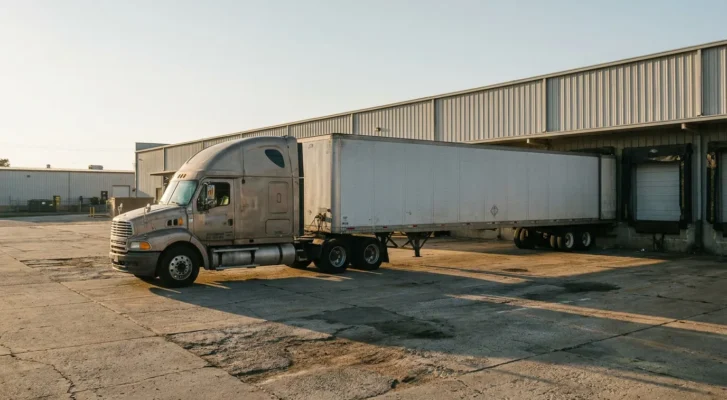
$604 Million Broker Verdict Signals New Options for Indiana Truck Victims
Why the C.H. Robinson Verdict Puts Truck Accident Spoliation Letter FMCSA Evidence in the Spotlight
Key Takeaways: A landmark $604 million verdict against a freight broker has sharpened national attention on when brokers, not just carriers, can be held accountable for catastrophic truck crashes. In Indiana, a truck crash victim’s recovery is shaped by the state’s modified comparative fault system and a two-year filing window that courts generally enforce strictly. Federal safety rules and driver-qualification standards often anchor negligent carrier selection claims against brokers. A recent Indiana Supreme Court decision signals that victims should name every potential defendant in one lawsuit rather than rely on a later filing. Preserving digital and physical evidence early, often through a formal preservation demand, can be decisive. Outcomes always depend on the specific facts of each case.
The transportation industry is watching a jury award that reframes who pays when a commercial truck causes life-altering injuries. The widely reported C.H. Robinson verdict, totaling roughly $604 million, arose from a devastating crash and placed freight broker liability squarely at the center of trucking litigation. For anyone injured on I-465, I-70, or a surface street in Indianapolis, the message is practical: the company that dispatched the load may share responsibility with the driver and the motor carrier. That shift matters most when a carrier’s insurance cannot begin to cover a serious injury.

The Legal Backdrop: Broker Duties and Indiana Fault Rules
Freight brokers occupy a defined role in the transportation chain, and that role carries obligations. Brokers of property are federally regulated, and a broker’s duty to exercise reasonable care in selecting a carrier generally arises under common-law negligence principles rather than from the broker registration rules alone. Victims often pursue brokers precisely because the minimum insurance a motor carrier must maintain can fall far short of the cost of catastrophic harm. When a carrier is underfunded, a negligent carrier selection theory against the broker may become the most meaningful path to plaintiff truck injury recovery.
Federal Standards Brokers and Carriers Must Meet
Negligent-selection claims frequently rely on the federal safety framework that governs carriers and drivers. Safety-fitness procedures and driver-qualification standards are codified in the Federal Motor Carrier Safety Regulations, and plaintiffs use them to show what a reasonable broker should have reviewed before hiring a carrier. You can review the underlying rules through the agency’s official federal motor carrier safety regulations portal. Whether a broker’s selection fell below a reasonable standard is generally a fact-dependent question, and courts weigh the evidence available at the time the load was arranged.
Indiana’s Comparative Fault Act in Trucking Cases
Indiana applies a modified comparative fault approach that can reduce or eliminate a recovery. Under the Comparative Fault Act, which took effect on January 1, 1985, a claimant who is more than 50% at fault is barred from recovering, and otherwise damages are reduced in proportion to the claimant’s share. A factfinder must allocate 100% of the fault in a single action, including fault assigned to nonparties. The full statutory framework appears in the Indiana General Assembly’s index for Title 34 civil law and procedure, which also houses limitations periods and damages rules. Note that the Act’s fault-allocation provisions apply differently to tort claims against governmental entities, which are instead governed by the Indiana Tort Claims Act.
A Familiar Indianapolis Scenario
Imagine a delivery driver on the northeast side, stopped in traffic near an interstate on-ramp, struck from behind by a loaded semi. The driver suffers a spinal injury, months of lost wages, and mounting medical bills, only to learn the motor carrier carries limited coverage. In this common situation, the broker that selected a carrier with a troubling safety record may become a central defendant. This is the type of case where broker accountability can change everything for truck crash victims.
The emotional weight of that moment is real, and so are the deadlines that follow. Families juggling rehabilitation and insurance calls may not realize that evidence begins disappearing almost immediately. Electronic logging data, dispatch records, and the broker’s carrier-vetting file are often the keys to proving negligence, and they can be overwritten if no one demands their preservation. Acting early, generally with guidance from a semi-truck accident lawyer, helps protect those records before they are gone.
Truck Accident Spoliation Letter FMCSA Evidence and Why Timing Matters
A truck accident spoliation letter fmcsa demand is a formal notice instructing a carrier, broker, or insurer to preserve specific evidence. These letters typically identify categories of records that are relevant to fault, and they put the recipient on notice that destroying that evidence could carry consequences. The truck accident spoliation letter fmcsa strategy is valuable because much of the proof in a commercial vehicle injury claim is digital and time-sensitive. When properly used, this tool can help preserve the very records that establish negligence.
Evidence commonly targeted in a preservation demand includes several categories that fade quickly. A well-drafted letter often requests items such as:
- Electronic logging device (ELD) and hours-of-service data
- Dispatch, load, and broker-to-carrier communication records
- Driver-qualification files and carrier safety-fitness documentation
- Post-crash inspection reports, photographs, and telematics
- Insurance policy and coverage information
Preservation is only the first step, and Indiana law limits how disputes over destroyed evidence play out. Courts may consider sanctions when a party destroys relevant evidence, but the remedy depends on the facts and the requesting party generally must show the evidence was relevant and within the other side’s control. Indiana also does not recognize an independent cause of action for first-party spoliation, so the remedy typically comes through evidentiary sanctions or inferences rather than a separate claim. This is where the truck accident spoliation letter fmcsa framework connects directly to trucking negligence 2026 litigation strategy. Because outcomes vary, victims should not assume any particular sanction will follow.
Building Broker Liability After the C.H. Robinson Verdict
Recent Indiana appellate guidance reinforces a practical rule: name every potential defendant in one lawsuit. In the 2023 decision reported as Davidson v. State, the Indiana Supreme Court held that a plaintiff seeking tort damages from multiple tortfeasors generally must pursue them together, and later claims over the same crash may be barred. Because the Comparative Fault Act requires a jury to allocate all fault at once, leaving out a freight broker can leave no fault available to assign to that party later. A concurring justice would not adopt a rigid joinder rule in mixed private and governmental cases, which is a useful reminder that this area remains partly unsettled.
Why You Must Name Every Defendant Early
Defendants can shrink their exposure by pointing fingers at those who are not in the courtroom. Under Indiana practice, defendants bear the burden of naming and proving the fault of nonparties, and fault may be allocated to entities that were never sued, provided a nonparty is timely disclosed under the applicable rules. That dynamic makes it critical to identify the driver, the motor carrier, and the broker before filing, rather than after. For a deeper look at the parties who may share responsibility, review this discussion of commercial truck crash liability in Indianapolis cases.
The two-year window for most Indiana personal injury claims adds urgency to this analysis. Indiana’s civil statute of limitations for personal injury generally requires filing within two years, and courts tend to interpret exceptions such as tolling or the discovery rule narrowly. This civil deadline is distinct from any administrative claim deadline that may apply when a government entity is involved. Because these timelines can be unforgiving, and because they turn on specific facts, prompt legal review is often essential to preserving a claim.
How Does This Impact Me?
What Does the Broker Verdict Mean for My Indiana Case?
It signals that a freight broker may be a viable defendant when a carrier is underinsured. The C.H. Robinson verdict, an out-of-state jury award that remains subject to appeal, does not control Indiana courts, but it reflects a broader willingness to examine broker conduct. Whether a broker can be held liable in your case depends on the facts of the carrier-selection decision.
Does This Change My Deadline to File?
Generally, no, the standard two-year personal injury limitations period still applies. What the recent case law changes is strategy, because you may need to identify and name the broker within that same window rather than in a later suit. Tolling and discovery exceptions can apply in limited circumstances, but courts construe them narrowly.
What Evidence Should I Try to Protect First?
Focus on the time-sensitive digital records that fade fast, such as ELD and dispatch data. A prompt truck accident spoliation letter helps put carriers and brokers on notice to preserve those materials. Physical evidence, photographs, and witness contact information also matter and should be documented early.
Can I Still Recover If I Was Partly at Fault?
Possibly, because Indiana uses modified comparative fault rather than an all-or-nothing bar. If your share of fault is 50% or less, your damages are generally reduced by your percentage rather than eliminated. If your fault exceeds that threshold, recovery is generally barred.
What Should I Do Next?
Consider gathering your records and consulting counsel before deadlines and evidence slip away. An attorney can evaluate whether broker liability, uninsured or underinsured coverage, and nonparty defenses affect your commercial vehicle injury claim. Early action generally preserves the most options.
Moving Forward After a Commercial Truck Crash
The headline number in the broker verdict is dramatic, but the practical lesson for Indianapolis victims is grounded and actionable. When a truck crash causes serious harm, the path to fair compensation may run through the broker as well as the carrier and driver, provided the evidence is preserved and every defendant is named in time. Indiana’s fault rules and filing deadlines reward preparation and punish delay, and the outcome of any individual matter depends on its particular facts. To understand how these principles apply to injuries from semis, buses, and delivery vehicles, learn more about how a semi-truck accident lawyer approaches commercial cases.
If a commercial vehicle crash has upended your life, you do not have to sort through these deadlines alone. The team at Poynter & Bucheri helps injured Indiana motorists understand their options for pursuing fault-based recovery. You can call [(317) 406-7443]((317) 406-7443) or contact us today to discuss how this developing area of trucking law may affect your situation.