
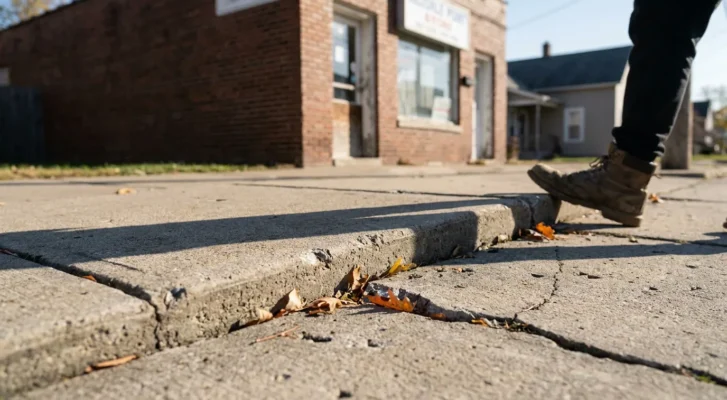
Can a Trip and Fall on an Indianapolis Sidewalk Lead to a Claim?
When a Cracked Indianapolis Sidewalk Becomes a Legal Matter
Key Takeaways: A trip and fall on an Indianapolis sidewalk can lead to a valid injury claim when the responsible party failed to maintain reasonable safety. Success requires proving duty, breach, causation, and damages, with "notice" of the hazard often determining breach. Duty may rest with a private owner, the City of Indianapolis, or both. Claims against the city follow Indiana’s tort claims framework, including notice generally within 180 days under IC 34-13-3-8, plus immunity limits and damage caps. For private parties, Indiana’s modified comparative fault bars recovery if you are 51% or more at fault, while government claims follow common law contributory negligence where any fault may bar recovery. Acting quickly to preserve evidence and meet strict deadlines is critical.
A trip and fall on an Indianapolis sidewalk can lead to a valid injury claim, but the outcome depends on who controlled the walkway and whether they failed to maintain reasonable safety. Uneven slabs, crumbling concrete, tree roots, and untreated ice cause serious harm every year. Sidewalk accidents fall under premises liability, requiring property owners to maintain reasonably safe environments. Recovery depends on duty, breach, causation, and your fall’s specific facts.
If you were hurt and are unsure of your options, Poynter & Bucheri is ready to listen. Call (317) 406-7443 or reach out through our confidential case review form to discuss your next step.

Who Is Actually Responsible for a Sidewalk in Indianapolis?
Identifying the correct party is a first hurdle in any trip and fall Indianapolis case. Responsibility can fall on adjacent private property owners, government entities like the City of Indianapolis, or both. A fall outside a business may point toward the owner, while a public walkway hazard may implicate the city.
When government maintains the sidewalk, different rules apply. Claims against Indianapolis are governed by Indiana’s tort claims framework under IC 34-13-3-1. This means specialized procedures rather than standard processes for private property. To understand how government and private duties overlap, review when you might hold a city accountable for a fall on public walkways.
💡 Pro Tip: Photograph the exact location from multiple angles and note nearby addresses. Establishing precisely where you fell determines which party owed you a duty.
The Four Elements Behind Every Slip and Fall Indianapolis Indiana Claim
Proving a sidewalk injury claim requires more than showing harm. You must establish: duty of care, breach of that duty, causation, and damages. Each element needs evidence, and missing one can undermine your case.
"Notice" frequently decides whether breach occurred. Actual notice means the owner was directly informed; constructive notice means the hazard existed long enough that they should have known. Owners may defend by arguing no warning, so documenting how long a hazard existed is decisive.
Building the Evidence That Supports Causation and Damages
Causation links the unsafe condition to your injuries; damages reflect real costs you absorbed. Helpful evidence includes:
- Dated photos of the defect and surrounding conditions
- Medical records connecting injuries to the fall
- Witness statements and incident reports
- Maintenance histories showing prior knowledge
Preserving proof early matters because conditions change quickly. Cities and owners may repair defects within days. Acting promptly protects your evidence and strengthens any sidewalk fall claim Indianapolis residents pursue.
What to Do After You Say "I Tripped and Fell Flat on My Face"
The moments after a fall can shape your entire claim. Seek medical attention first, both for health and to create a record tying injuries to the incident. Even if only shaken, some injuries surface later, and contemporaneous medical records carry weight.
Indiana applies strict deadlines that vary by defendant. For claims against the City of Indianapolis, IC 34-13-3-8 requires notice generally within 180 days. These administrative deadlines are far shorter than many expect and separate from civil lawsuits. Courts interpret exceptions narrowly, making timely action critical.
💡 Pro Tip: If your fall happened on a public sidewalk, treat the calendar as your priority. Missing the 180-day notice window under IC 34-13-3-8 can bar an otherwise strong claim.
| Type of Property | Likely Responsible Party | Key Deadline Consideration |
|---|---|---|
| Public city sidewalk | Government entity (e.g., City of Indianapolis) | Tort claim notice generally within 180 days under IC 34-13-3-8 |
| Private commercial frontage | Adjacent business or property owner | Standard premises liability principles apply |
| Mixed responsibility | Both public and private parties | May require notice and standard claim steps |
How Indiana’s Comparative Fault Rule Affects Your Recovery
Even a clear hazard does not guarantee full compensation, because Indiana weighs each party’s fault. For private parties, Indiana follows modified comparative fault under IC Title 34, Article 51, Chapter 2. This Act generally does not apply to governmental entities, so claims against Indianapolis remain governed by common law contributory negligence, where even small claimant fault can bar recovery. Indiana applies the 51% threshold to private defendants, if you are 51% or more at fault, you recover nothing.
Partial fault can shrink or eliminate awards. Wearing appropriate footwear, paying attention, and avoiding obvious obstacles all become relevant to fault allocation. Outcomes are highly fact-dependent.
💡 Pro Tip: Avoid posting about your fall on social media. Comments suggesting distraction or rushing can argue higher fault against you.
Common Defenses Raised in Indiana Sidewalk Accident Cases
Property owners and insurers rely on recurring defenses. One is the "open and obvious" hazard defense. However, even if obvious, owners may be liable if they should have anticipated distraction or legitimate reasons for not observing danger. Review additional defenses raised in slip and fall cases to understand how these arguments unfold.
Assumption of risk surfaces in premises liability Indiana disputes. This requires showing you had actual knowledge of the specific danger and appreciated its nature. Simply walking on a sidewalk does not establish acceptance of hidden or unexpected risks.
Special Rules When the City Is Involved
Government defendants carry unique protections. Indiana provides governmental immunity under IC 34-13-3-3, yet immunity has limits. The statute at IC 34-13-3-3(18) notes "this subdivision shall not be construed to relieve a responsible governmental entity from the continuing duty to provide and maintain public highways in a reasonably safe condition," which courts read to include sidewalks.
Damages against public entities are capped. Under IC 34-13-3-4, Indiana limits total recoverable amounts and bars punitive damages against governmental defendants. These caps are detailed in Indiana Code Title 34 and can meaningfully affect public sidewalk claim value.
💡 Pro Tip: Keep a dedicated folder for every medical bill, mileage log, and pay stub reflecting missed work. Organized documentation demonstrates your full damages.
Frequently Asked Questions
-
How long do I have to file a claim for an Indianapolis sidewalk fall?
It depends on who is responsible. For public sidewalks maintained by Indianapolis, tort claim notice must generally be filed within 180 days under IC 34-13-3-8. Courts interpret extensions narrowly, so prompt action is wise.
-
What if I was partly to blame for tripping?
Your recovery may be reduced or barred depending on the defendant. Against private parties, Indiana’s modified comparative fault in IC Title 34, Article 51, Chapter 2 reduces recovery by your fault percentage and bars it if you are 51% or more at fault. Against government, common law contributory negligence applies, meaning any fault can bar recovery.
-
Can I sue if the hazard was obvious?
Possibly, because the open and obvious defense is not absolute. Owners may still be liable if they should have anticipated distraction or legitimate reasons you did not notice the danger. This depends on your fall’s circumstances.
-
Who pays if both the city and a business were responsible?
Both parties may share liability. Responsibility can rest with private owners, government, or both, which may require following both administrative notice steps and standard premises liability procedures.
-
Do I need an attorney for a trip and fall claim?
Legal guidance helps navigate deadlines and defenses. Sidewalk cases involve disputed notice, comparative fault, and statutory caps. An experienced Indianapolis fall injury lawyer can evaluate your situation’s unique facts.
Protecting Your Rights After a Sidewalk Injury
A trip and fall on an Indianapolis sidewalk can lead to a legitimate claim when the responsible party failed to maintain a reasonably safe walkway. Success depends on proving duty, breach, causation, and damages while navigating notice requirements, comparative fault, and immunity rules for government defendants. Because these cases are fact-sensitive, claim strength may hinge on evidence gathered in the earliest days.
When ready to discuss your options, Poynter & Bucheri is here to help injured people across Indiana. Call (317) 406-7443 or send details through our secure contact page so we can review what happened and explain how Indiana law may apply.