
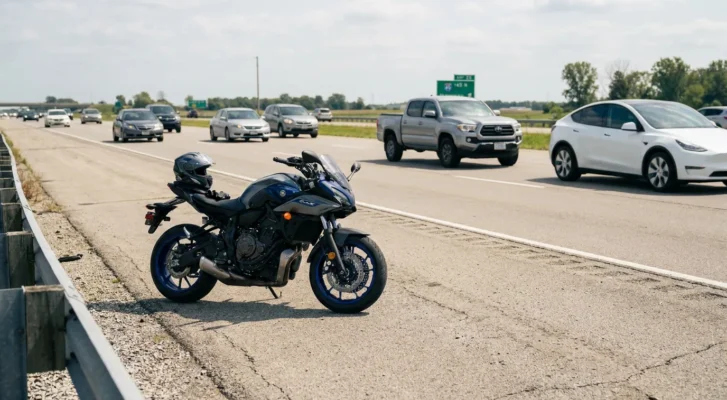
What Does Indiana Code 9-21-10-6 Say About Motorcycle Lane Splitting?
Understanding Indiana’s Motorcycle Lane-Use Rule After a Crash
Key Takeaways: Indiana Code 9-21-10-6 does not authorize lane splitting; it gives every motorcyclist the right to full use of a traffic lane and prohibits other vehicles from depriving them of it. The statute’s only exception allows two motorcycles, other than autocycles, to ride no more than two abreast in a single lane when both operators consent. Originally added in 1991 and amended in 2015, the current text is what riders should rely on. Because lane splitting is not authorized, insurers may argue an injured rider bears some fault under Indiana’s modified comparative fault system, where recovery is reduced by the rider’s share of fault and barred entirely if that share exceeds fifty percent. Injured riders in Indianapolis should preserve evidence, document damages, seek prompt medical care, and be mindful of Indiana’s two-year statute of limitations.
Lane splitting is not permitted in Indiana, and Indiana Code 9-21-10-6 is the statute most often cited on the point. The law gives every motorcyclist the right to full use of a traffic lane and prohibits any vehicle from being operated in a manner that deprives another vehicle of that full use. Because the statute never authorizes riding between lanes of moving or stopped traffic, lane splitting is generally understood to fall outside what Indiana law allows. For injured riders in Indianapolis, understanding this rule matters because how a crash happened often shapes who is held responsible.
If you or a family member were hurt in a motorcycle collision, the team at Poynter & Bucheri is ready to review your situation. Call our office at (317) 406-7443 or reach out through our online case review form to discuss your options.
What Indiana Code 9-21-10-6 Actually Says
The plain text of the statute is the starting point for any lane-splitting analysis. Under IC 9-21-10-6, a motorcycle is entitled to full use of a traffic lane, and a vehicle may not be operated in a manner that deprives another vehicle of that full use. This language protects riders from cars that crowd or squeeze them and supports the view that a lane is meant to be occupied by one vehicle at a time.
The statute carves out one narrow exception for motorcycles riding together. IC 9-21-10-6 provides that motorcycles, other than autocycles, may, with the consent of both operators, be operated no more than two abreast in a single traffic lane. That permission applies only between two motorcycles that agree to ride together. It does not authorize a motorcyclist to weave between cars, which is why lane splitting law in Indiana is generally understood to prohibit the practice.
💡 Pro Tip: If an officer’s crash report describes your riding position as "lane splitting" or "filtering," ask how that conclusion was reached. The label can influence fault, and it is worth documenting your actual position in the lane with photos or witness statements as soon as possible.
Is Lane Splitting Legal in Indiana Under Current Law?
No Indiana statute expressly legalizes lane splitting, and IC 9-21-10-6 points the other way. The practice is not authorized and is generally treated as improper lane use. Indiana has not enacted the kind of permissive statute that a handful of other states have adopted, so riders should assume the maneuver is prohibited on Indiana roads.
This lane-use rule sits within Indiana’s broader motorcycle regulatory scheme. The provision is codified in Title 9, Motor Vehicles, Article 21, Traffic Regulation, Chapter 10, Motorcycles, which governs how motorcycles operate on public roadways. You can review the full framework in the state’s official Indiana motor vehicle code, which houses the traffic regulations that apply to riders.
The current version of the statute reflects amendments made over several decades. IC 9-21-10-6 was originally added in 1991 and amended in 2015, when the "other than autocycles" language was added. Riders and their families should rely on the current amended text when evaluating a claim.
Why the Lane-Splitting Question Affects Your Injury Claim
How a crash occurred directly influences whether an injured rider recovers compensation. Indiana follows a modified comparative fault system under the Indiana Comparative Fault Act, IC 34-51-2, which governs most negligence-based personal injury claims. Under this framework, an injured person’s recovery is reduced by their share of fault, and a claimant who is found more than fifty percent at fault is barred from recovering damages under IC 34-51-2-6.
Because lane splitting is not authorized, an insurer may argue the rider bears some or significant fault. If the other driver’s negligence caused or contributed to the collision, that argument does not automatically end the case, but it can complicate it. The comparative fault rules are found in Title 34, and you can see how the state organizes its civil liability provisions in the official Indiana civil liability code. Sorting out fault percentages is often fact-intensive and depends on the specific circumstances of each crash.
| Rider’s Share of Fault | General Effect on Recovery |
|---|---|
| 0% to 50% | May recover damages, reduced by the rider’s percentage of fault |
| 51% or more | Generally barred from recovering damages |
💡 Pro Tip: Preserve every piece of evidence you can, including dashcam footage, traffic-camera data, damaged gear, and the names of witnesses. In comparative fault disputes, small details often decide how responsibility is divided.
Related Motorcycle Provisions Riders Should Know
IC 9-21-10-6 is not the only statute that shapes how motorcycles may be operated. Article 21 contains additional rules addressing licensing, age, and roadway restrictions that can affect a rider’s claim. Related provisions set conditions for operating certain motor-driven cycles, including minimum age, proper licensing or endorsement, and limits on where the vehicle may travel.
These background rules can matter when an insurer evaluates a rider’s conduct. Common issues that surface after a crash include:
- Whether the rider held a valid motorcycle endorsement at the time of the collision
- Whether the motorcycle was operated on a roadway where it was permitted
- Whether the rider was positioned lawfully within the lane under motorcycle lane use Indiana standards
- Whether another driver violated Indiana traffic laws in a way that caused the crash
These factors are part of the larger picture that a court may consider when weighing negligence and comparative fault. Whether any single factor helps or hurts a claim depends on the facts.
💡 Pro Tip: Get medical attention promptly, even if injuries feel minor at first. Gaps in treatment give insurers room to argue that your injuries were not serious or were caused by something other than the crash.
Practical Steps After a Motorcycle Collision in Indianapolis
Taking organized action early can protect both your health and your legal rights. Riders researching liability after a crash often benefit from understanding how the lane-use and comparative fault rules interact before speaking with an insurance adjuster. This detailed guide on whether lane splitting is legal in Indiana can help you frame your questions.
Documenting your damages is one of the most important things you can do. Keep records of medical bills, lost wages, and out-of-pocket costs, and note how the injuries affect your daily life. This documentation supports claims for medical expenses, lost income, and pain and suffering.
💡 Pro Tip: Indiana’s personal injury statute of limitations under IC 34-11-2-4 generally allows two years to file a lawsuit, and courts interpret exceptions such as tolling narrowly. Waiting too long may bar a claim entirely, so it is wise to confirm your deadline early rather than assume an extension applies.
Working with a legal team that understands rider-specific issues can make a difference. A firm respected for handling motorcycle crash claims can help gather evidence, counter comparative fault arguments, and communicate with insurers. Learn more from an is lane splitting legal in Indiana lawyer who focuses on protecting injured riders.
Frequently Asked Questions
-
Does Indiana Code 9-21-10-6 mention lane splitting by name?
No. The statute grants motorcyclists full use of a traffic lane and prohibits other vehicles from depriving them of it, which is generally read to mean lane splitting is not authorized. -
Can two motorcycles legally ride side by side in one lane?
Under IC 9-21-10-6, two motorcycles other than autocycles may ride no more than two abreast in a single lane if both operators consent. This is different from lane splitting between cars. -
If I was lane splitting when I was hit, can I still recover damages?
Possibly, but it depends on the facts. Under Indiana’s comparative fault rules in IC 34-51-2, your recovery may be reduced by your share of fault, and a finding of more than fifty percent fault bars recovery. -
Where is the motorcycle lane-use rule located in the Indiana Code?
It appears in Title 9, Motor Vehicles, Article 21, Traffic Regulation, Chapter 10, Motorcycles, as Section 9-21-10-6. -
How long do I have to file a motorcycle accident claim in Indiana?
Indiana’s general personal injury statute of limitations under IC 34-11-2-4 is two years, subject to limited exceptions that courts apply narrowly. Confirm your specific deadline early.
Protecting Your Rights as an Injured Rider
Indiana Code 9-21-10-6 confirms that motorcyclists are entitled to a full traffic lane and does not authorize lane splitting. For injured riders, that reality intersects with Indiana’s comparative fault system, where the details of how a crash happened can shape the value of a claim. Because these cases are fact-sensitive and the statutes carry meaningful exceptions, general information is a starting point rather than a substitute for individualized guidance.
If you were hurt in a motorcycle accident in Indianapolis, the team at Poynter & Bucheri is here to help you understand your options. Call us at (317) 406-7443 or send us the details of your crash through our confidential contact page to get answers about your rights and next steps.