
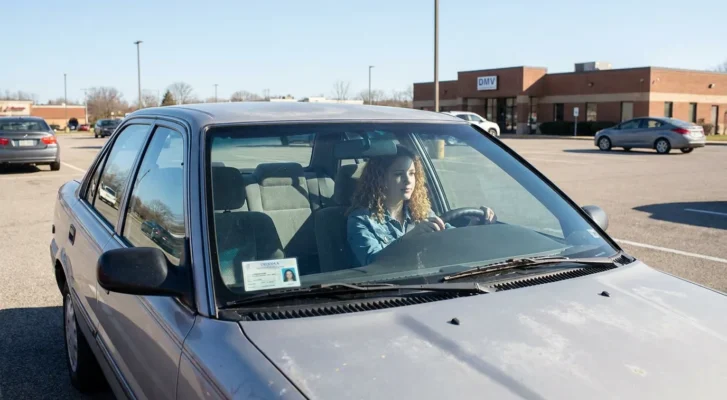
New Indiana Driving Age Law Takes Effect July 1, 2026: Crash Risks
Indiana’s July 1 Driving Age Change Raises New Questions About Teen Crashes and stroke after car accident Claims
Key Takeaways: Indiana’s July 1, 2026 law lets teens who complete driver’s education get a probationary license at age 16 instead of 16 years and 90 days, though graduated licensing restrictions remain. Night driving limits, passenger rules, and telecommunication device bans still apply and may become critical evidence after crashes involving newly licensed teens. In Indianapolis injury cases, the key question is whether a rule violation helped cause the collision, especially when injuries worsen or involve complications such as a stroke after car accident trauma.
Indiana’s July 1, 2026 driving age change matters in Indianapolis because it may put younger newly licensed drivers on the road without changing core restrictions that govern how they must drive. For crash victims and families, this affects evidence, liability, and in severe cases, damages involving brain injury, delayed symptoms, or even a stroke after car accident complications.

What Actually Changes on July 1, 2026
The headline change is narrow but important: Indiana is lowering the minimum age for teens who complete driver’s education to receive a probationary license. Before July 1, 2026, Indiana required teens with driver’s education to be at least 16 years and 90 days old. Under the new law, that teen may be licensed at exactly age 16, while the graduated licensing framework remains unchanged.
The Indiana driving age law 2026 is better understood as an earlier entry point into the same probationary system, not a wholesale rewrite. Applicants still must hold a learner’s permit for 180 days, present a supervised driving log, and pass required tests. Driver’s education is not universally required but permits earlier licensing: applicants who complete driver’s education may be licensed at age 16 (after July 1, 2026), previously 16 years and 90 days, while applicants who do not complete driver’s education must wait until age 16 years and 270 days. For assessing crash risk, that distinction matters because risk depends on exposure and compliance, not just age.
Indiana continues applying strict probationary restrictions to drivers under 21 during the first 180 days after license issuance. New probationary drivers generally cannot drive between 10 p.m. and 5 a.m. during that initial period, subject to exceptions for work, school-sanctioned activities, religious events, or accompaniment by a qualified licensed adult.
Indiana’s GDL Rules Still Do Most of the Safety Work
Graduated driver licensing laws exist because novice teen drivers face elevated crash risk in predictable situations. Night driving and carrying young passengers are conditions associated with higher danger, which is why Indiana keeps those restrictions even as HB1200 Indiana driving age rules lower the minimum licensing age for some teens.
Indiana’s probationary license phase includes several restrictions that may become highly relevant after a collision:
- No driving from 10 p.m. to 5 a.m. for the first 180 days, subject to statutory exceptions
- Additional late-night curfews after the first 180 days and until age 18
- A 180-day passenger restriction unless a qualifying licensed adult is present, with limited family-member exceptions
- A ban on using any telecommunication device while driving except for emergency 911 calls
- Ineligibility for court diversion programs for probationary license holders
These details matter because a rule violation may become part of the liability analysis in a civil injury claim. If a teen driver was on the road during prohibited hours or carrying unauthorized passengers, that fact may strengthen an argument of negligence. Whether any violation is admissible or legally significant depends on the facts and court rulings.
Why Younger Licensing Could Affect Crash Litigation in Indianapolis
The practical concern is simple: more 16-year-old drivers may operate independently sooner, even though their judgment and hazard recognition are still developing. July 2026 Indiana traffic law changes could increase crashes where age-specific restrictions, parent knowledge, supervision history, and permit compliance become relevant evidence.
A younger licensing age can shift how fault is investigated
When a serious wreck involves a newly licensed teen, investigators may need to examine more than the ordinary right-of-way question. They may look at whether the driver held the permit long enough, whether the trip fell within nighttime restrictions, whether prohibited passengers were present, and whether phone use played a role. These questions often affect how insurers frame responsibility and how injured people prove young driver accident liability.
Serious injury claims can become medically complex fast
Some crash injuries don’t fully reveal themselves at the scene, especially neurological injuries. A person initially feeling shaken but stable may later develop confusion, weakness, severe headache, speech changes, or other symptoms suggesting a concussion, vascular injury, or stroke after car accident trauma. Prompt medical evaluation is essential for health and may become critical evidence connecting the collision to the injury.
A Realistic Indianapolis Scenario
Imagine an Indianapolis family driving home just after 10:30 p.m. on July 5, 2026, when a newly licensed 16-year-old runs a red light and crashes into their SUV. The teen completed driver’s education and lawfully obtained a probationary license at age 16, but he was still within the first 180 days of licensure. He had two friends in the car and no qualifying adult passenger.
The injured parent feels neck pain and dizziness, while a child in the back seat seems only frightened. Two days later, the parent develops slurred speech and worsening headache, and doctors begin evaluating a possible stroke after car accident event or other traumatic neurological complication.
The teen’s possible probationary-license violations wouldn’t automatically decide the case, but they could become important evidence. The time of day, passenger list, phone records, dashcam footage, vehicle data, and emergency-room timeline could all matter. For families trying to understand first steps after a wreck involving a teen, this guide on teen drivers’ first car accident may help frame what to preserve early.
What Victims Should Preserve After a Teen Driver Crash
The strongest injury claims are often built in the first days, before memories fade and digital evidence disappears. That’s especially true when a crash may involve Indiana teen driver negligence, because probationary-license restrictions create additional categories of proof.
Evidence that may help establish fault
Victims and families should preserve every source showing what the teen driver was doing before impact. Useful evidence may include:
- Crash report and any supplemental witness information
- Photos of vehicle positions, damage, debris, and traffic controls
- Names and contact information for passengers and bystanders
- Video from dashcams, nearby homes, businesses, or traffic cameras
- Cell phone records or app activity if distraction is suspected
- Proof of the driver’s age, license status, and issue date
- Information showing work, school, or religious-event exceptions if nighttime driving is disputed
Medical proof can be just as important as liability proof
Injury cases often become harder when symptoms evolve over time. If a victim later experiences dizziness, visual changes, numbness, speech problems, cognitive issues, or a suspected stroke after car accident episode, follow-up care and consistent documentation may become central to proving causation and damages.
How Indiana Authorities Frame Teen Risk
Indiana’s current rules fit within the broader graduated licensing model used nationwide to reduce novice-driver crashes. The graduated licensing laws table shows Indiana still requires a six-month permit holding period and ties some licensing ages to driver’s education completion. The state is lowering the licensing age for some teens without discarding core restrictions meant to manage risk.
State guidance emphasizes that probationary drivers face tighter rules than adults. The Indiana Bureau of Motor Vehicles describes the passenger limits, nighttime restrictions, and strict ban on telecommunication-device use for new probationary drivers, all of which may become relevant when evaluating whether the teen was driving lawfully.
When a Teen Crash Becomes a Damages Case, Not Just a Traffic Case
Many families initially focus on the ticket, but civil injury claims usually turn on losses, not just violations. If a crash causes hospitalization, rehabilitation, missed work, cognitive symptoms, or a stroke after car accident complication, the legal analysis may expand far beyond the underlying traffic infraction.
Damages often include more than emergency-room bills
A serious auto case may involve both economic and non-economic losses. Depending on the facts, recoverable damages may include medical expenses, future treatment, lost wages, reduced earning capacity, pain and suffering, and the impact of neurological symptoms on daily life. In catastrophic cases, life-care planning and physician testimony may be required.
Insurers may dispute delayed symptoms
Insurance carriers often question whether later-developing symptoms were really caused by the collision. That’s one reason victims with complex injuries may benefit from early legal guidance and organized medical proof. Readers looking for broader help with Indiana car accident attorney issues should understand that these cases often rise or fall on documentation, timing, and the ability to connect the crash mechanism to the injury.
How Does This Impact Me?
If a teen driver broke a probationary rule, does that mean I automatically win my case?
Not necessarily, but it may significantly help your claim. A violation of a passenger limit, nighttime restriction, or device-use ban can be relevant evidence of negligence, yet Indiana civil cases still require proof that the violation contributed to the crash and caused actual damages.
What if my symptoms appeared days later?
Delayed symptoms are common in many collision cases, especially with head, neck, and vascular injuries. If you develop warning signs after the wreck, prompt medical evaluation may protect both your health and the evidentiary record. Courts and insurers often scrutinize timing closely.
Does the July 1, 2026 law change my deadline to bring an injury claim?
This driving-age change does not change usual filing deadlines for crash cases. Deadlines vary depending on parties involved and whether a government entity may be implicated. Anyone concerned about time limits should get case-specific guidance quickly.
What should I do if the other driver was 16 and the insurer is pressuring me?
Avoid giving a detailed recorded statement before you understand your injuries and available evidence. Gather the crash report, preserve photos and video, follow medical advice, and document every new symptom, missed shift, and expense.
Can a crash lead to a stroke after car accident trauma even if I walked away?
Under certain circumstances, yes, serious complications may emerge after the initial event. Not every headache or dizzy spell signals a vascular injury, but sudden neurological symptoms should be treated seriously. Fast evaluation may help establish whether the crash triggered the condition.
What This Law Means for Indianapolis Families Going Forward
Indiana’s new teen licensing law is a targeted change, but its real-world effects may surface in crash investigations across Indianapolis after July 1, 2026. The state is allowing some teens to drive independently sooner while keeping nighttime, passenger, and device-use rules designed to reduce novice-driver danger. For injured victims, teen-driver cases may involve a tighter mix of statutory compliance issues, negligence proof, and medical causation disputes than an ordinary collision.