

When Is a Truck Driver Required to Take a Drug Test After an Accident?
When Federal and Indiana Law Require Post-Crash Testing
Key Takeaways: Under 49 CFR 382.303, federal rules generally require a truck driver drug test after an accident when someone dies. They also generally require one when the driver gets a ticket for a moving violation and either someone needs medical care away from the scene or a vehicle has to be towed. Carriers generally must finish alcohol testing within 8 hours and drug testing within 32 hours, and must keep records explaining any late or missed test. Indiana applies these federal rules to carriers that cross state lines and those that stay in Indiana. Separately, Indiana police generally must offer a breath or chemical test to drivers in fatal or serious-injury crashes, and any chemical test must be done within 3 hours. A driver who refuses an offered test generally commits an infraction and may lose their license. Test results, missing tests, and late tests can all matter in an injury claim, so save evidence quickly.
After a commercial truck crash, many families want to know whether anyone checked the trucker for drugs or alcohol. Federal rules generally require a test when someone dies, or when the driver is cited for a moving violation and either someone needs medical care away from the scene or a vehicle has to be towed. Indiana law adds its own rule: police generally must offer a breath or chemical test to drivers in fatal or serious-injury crashes. If you were hurt in an Indianapolis truck accident, these rules may tell you whether test results exist that could help show negligence.
If a tractor-trailer crash has changed your life or taken someone you love, Poynter & Bucheri can help you find out whether the required testing was done and how the results may affect your claim. Call (317) 406-7443 or contact us now to talk through what happened.
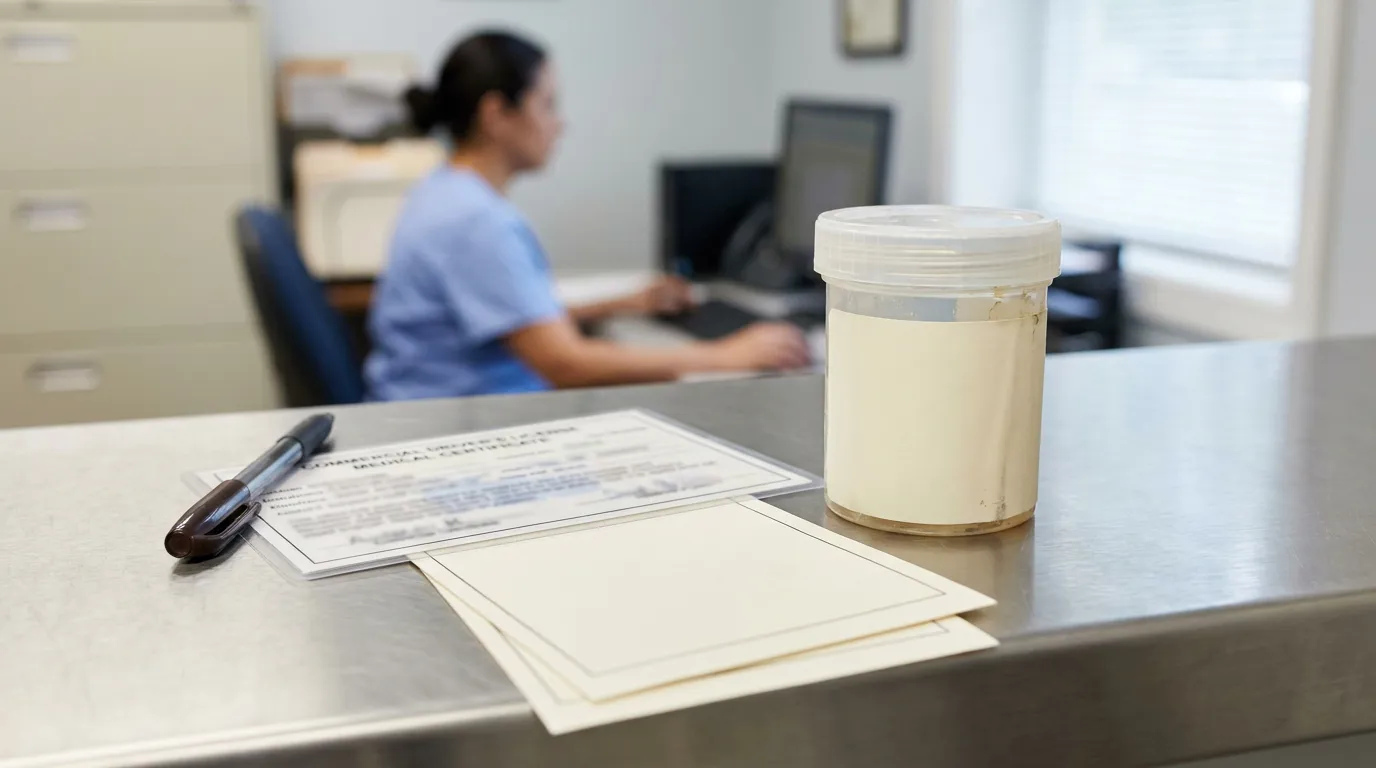
The Federal Rule Behind Every Truck Driver Drug Test After an Accident
Post-accident testing for commercial drivers comes from 49 CFR 382.303, part of the Federal Motor Carrier Safety Administration (FMCSA) drug and alcohol rules. These rules work with 49 CFR Part 40, which sets out how testing must be done. The trucking company must test the driver as soon as it can, but only when certain conditions are met. A crash alone does not always require a test.
The Three DOT Post-Accident Testing Triggers
Whether DOT rules require a test depends on how serious the crash was and whether the trucker got a ticket. Generally, a test is required in these cases:
- A death: Testing is generally required when someone dies, whether or not the driver was cited.
- Injury plus citation: Someone needs medical care right away, away from the scene, and the trucker is cited for a moving violation.
- Tow-away plus citation: A vehicle is disabled and towed from the scene, and the trucker is cited for a moving violation.
So whether a trucker gets tested often depends on what the officer at the scene decides. In a crash where no one dies, the federal testing duty may never apply if police do not cite the driver. That is why the crash report can be key evidence in many claims.
Testing Deadlines Under FMCSA Rules
FMCSA rules also set short deadlines. Under 49 CFR 382.303, alcohol testing generally must happen within 8 hours of the crash and drug testing within 32 hours. If the carrier does not do an alcohol test within 2 hours, it must write down why. If it does not test within 8 hours for alcohol, or 32 hours for drugs, it must stop trying and keep records explaining why. Those records can be useful evidence, because a missing test may raise questions about whether the company follows the rules.
Why Indiana Law Matters for Indianapolis Truck Crashes
Indiana makes the federal trucking safety rules part of state law. Under Indiana Code § 8-2.1-24-18(a), 49 CFR Parts 40 and 382, among others, are adopted into Indiana law and generally apply to carriers that cross state lines and those that stay within Indiana. So an Indianapolis trucking company that only hauls within Indiana generally still has to follow the federal post-accident testing rules.
The exceptions are narrow, and none of the listed ones appears to excuse drug or alcohol testing. The hours-of-service exceptions cover things like farm trucks, in-state construction vehicles, and emergency utility repairs.
What Indiana Police Must Do After a Fatal or Serious-Injury Crash
Apart from the trucking company’s federal duties, Indiana police have their own testing duties. Under Indiana Code § 9-30-7-3(a), an officer must offer a portable breath test or chemical test to anyone the officer has reason to believe was driving a vehicle in a crash that caused a death or serious bodily injury. This generally applies to truck drivers just as it does to everyone else.
When Officers Must Offer a Chemical Test
A clean breath result does not always end the matter. Under Indiana Code § 9-30-7-3(a)(1)-(3), the officer must offer a chemical test in three cases:
- The portable breath test shows alcohol.
- The breath test shows no alcohol, but the officer has probable cause to believe the driver is under the influence of a controlled substance or another drug.
- The driver refuses the portable breath test.
Time limits apply here too. Under Indiana Code § 9-30-7-3(b)-(c), every chemical test must be done within 3 hours after the crash. The law does not require officers to offer a test to an unconscious driver, which can leave gaps in the evidence, though police may still be able to get a blood sample with a warrant.
A Second State Basis for Fatal Truck Crash Testing
Indiana also requires a test that measures alcohol or drug levels in surviving drivers after serious crashes. Under Indiana Code § 9-27-5-4(b), each surviving driver in a crash involving a death or serious bodily injury must get a quantitative test, as far as practical and consistent with legal rights.
| Source of Duty | Who Acts | Key Trigger | Time Limit |
|---|---|---|---|
| 49 CFR 382.303 | Motor carrier | Death, or citation plus injury or tow-away | 8 hrs alcohol / 32 hrs drugs |
| IC § 9-30-7-3 | Police officer | Crash with death or serious bodily injury | 3 hours (chemical test) |
| IC § 9-27-5-4(b) | Testing of surviving drivers | Death or serious bodily injury | As far as practical |
What Happens If a Trucker Refuses Testing
In Indiana, refusing an offered test has real consequences. Under Indiana Code § 9-30-7-5(a), refusing a portable breath test or chemical test offered after a fatal or serious-injury crash is generally a Class C infraction. If the driver has a prior conviction for operating while intoxicated (OWI), it generally becomes a Class A infraction.
Refusal can also cost the driver their license. Under Indiana Code § 9-30-7-5, the court generally must suspend driving privileges for one year, or two years with a prior OWI conviction. For a professional trucker, a refusal can also lead to loss of the commercial driver’s license under federal rules.
💡 Pro Tip: Write down the names of the police agency and officers who responded, and keep any tow receipts or hospital discharge papers. These can help show which testing triggers applied.
How Test Results Can Affect Your Injury Claim
Drug and alcohol test results are only one part of a truck accident case, but they can matter a lot. A positive result may support a negligence claim against the driver and raise questions about how the carrier hires, supervises, and tests drivers. A missing or late test may also matter. A negative result does not mean the driver was not at fault. Fatigue, speeding, poor loading, and equipment failures cause many crashes.
Getting these records quickly matters. Carriers control their own testing files, logs, and electronic data, and they only have to keep some records for a limited time. An experienced truck accident lawyer can send letters demanding that the company save evidence before it is lost. Indiana generally gives injury victims two years to file a lawsuit, and claims against government bodies may require written notice within 180 days.
💡 Pro Tip: Lawyers often get test results held by the trucking company through formal discovery in a civil case. Police and carrier records may come from different places, so ask your attorney to look for both.
Frequently Asked Questions
1. Is every truck driver drug-tested after a crash?
No. Under 49 CFR 382.303, federal testing is generally required only after a fatal crash, or when the driver is cited and the crash involves an injury treated away from the scene or a towed vehicle. Indiana police testing duties generally apply in fatal or serious-injury crashes.
2. How quickly must a post-accident drug test happen?
Federal rules generally require alcohol testing within 8 hours and drug testing within 32 hours. Indiana chemical tests offered by police under Indiana Code § 9-30-7-3 must be done within 3 hours of the crash.
3. Do trucking companies that only operate in Indiana have to test drivers?
Generally, yes. Indiana Code § 8-2.1-24-18(a) applies federal Parts 40 and 382 to carriers that cross state lines and those that stay in Indiana.
4. What if the trucker refused the test?
Refusal is generally a Class C infraction under Indiana Code § 9-30-7-5, or Class A with a prior OWI conviction, and it can lead to a license suspension. The refusal may also be useful evidence in a civil claim.
5. Does a negative test mean the trucker was not at fault?
No. Many truck crashes involve fatigue, hours-of-service violations, poor maintenance, or poor loading. Fault depends on all of the evidence.
Protecting Your Rights After a Commercial Truck Crash
Federal rules and Indiana laws together set out when a trucker generally must be tested and how fast it has to happen. Whether testing was required, done properly, or skipped may affect how you prove negligence. Every case depends on its own facts. To learn more, explore our truck accident legal resources.
If you or a family member was hurt in an Indianapolis truck crash, Poynter & Bucheri can help you get the testing records and other evidence your claim may depend on. Call (317) 406-7443 or schedule a consultation today.
Disclaimer: This content is for informational purposes only and is not legal advice. Every case is unique, and results may vary. Consult an attorney about your specific circumstances.