
Indiana HEA 1155 Sets July 1, 2026 Private-Road Traffic Enforcement Pilot
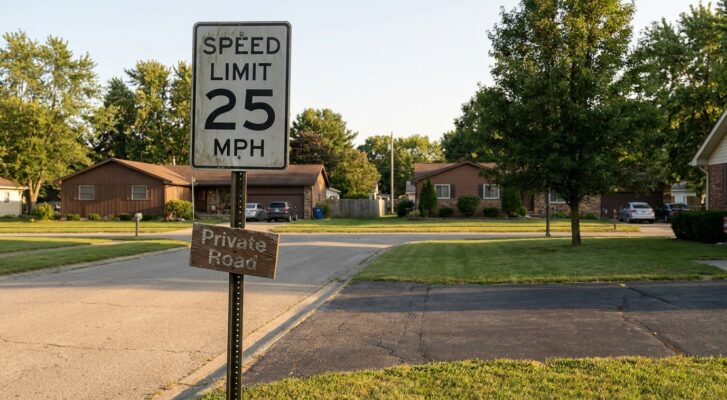
Indiana’s latest traffic-law change could become highly relevant after a serious crash inside a large HOA community in Indianapolis, Indiana. House Enrolled Act 1155 creates a new "Traffic Enforcement on Private Roads Pilot" under Indiana Code Title 9, Article 21 with an effective date of July 1, 2026. The law allows certain large homeowners associations to set enforceable speed limits and stop-sign requirements on qualifying private roads, with enforcement by off-duty law enforcement officers.
That matters because crash claims often turn on proof. If a collision happens in a subdivision where traffic rules were previously informal, this pilot may affect how fault is investigated, what evidence exists, and how insurers evaluate negligence. For someone searching for an Auto Accident Attorney in Indianapolis, IN after a neighborhood crash, the legal issue is whether the new framework changes how speeding, failure to stop, and roadway violations can be documented and proven.
What HEA 1155 changes in Indiana traffic law
HEA 1155 adds Chapter 23.5 to Indiana Code Article 21 and establishes a traffic enforcement pilot on certain private roads. The pilot applies only to subdivisions governed by a homeowners association containing at least 1,500 lots and at least 15 miles of private road. Participation is optional.
The law was signed as Public Law 54 on March 3, 2026. It includes a sunset date of July 1, 2028, and requires an implementation report by October 1, 2027. This is a limited pilot, not a permanent statewide change.
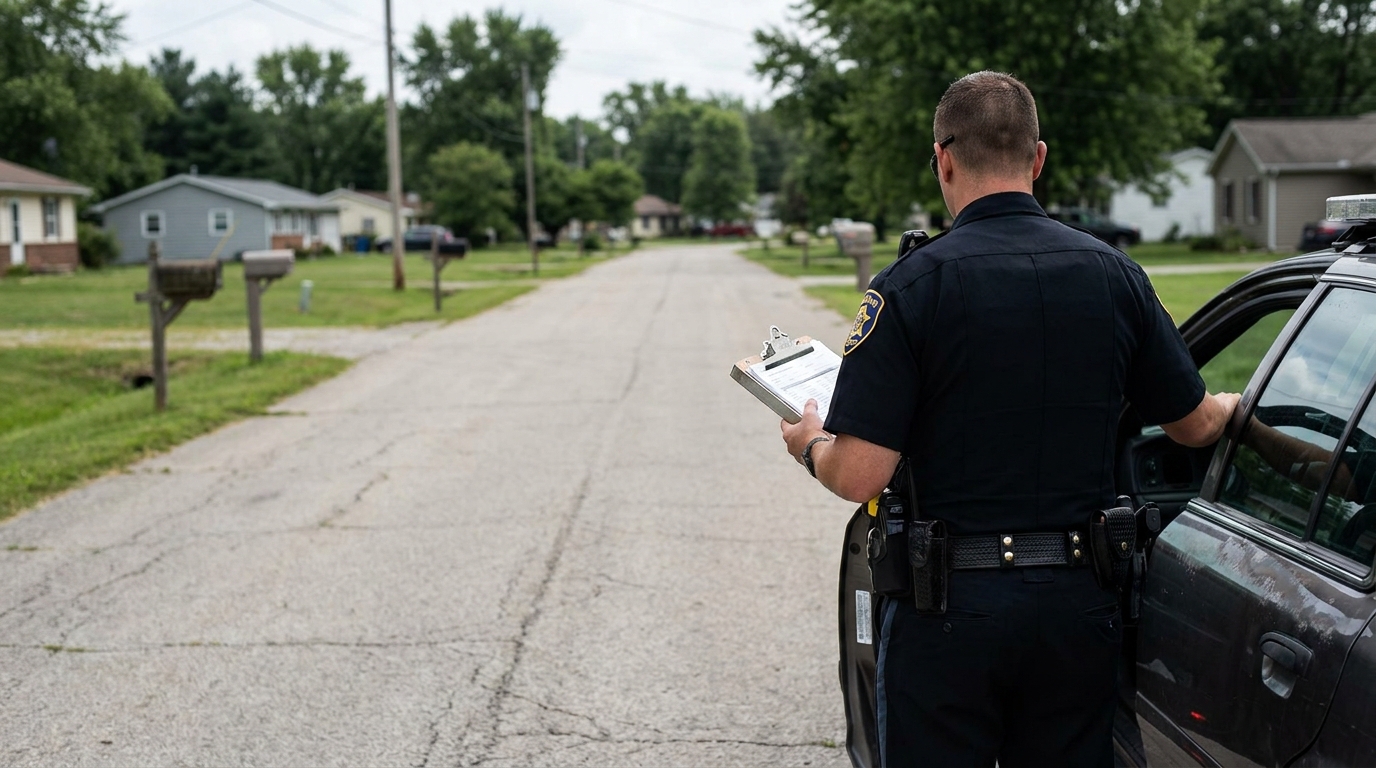
For injury claims, the most important feature is enforceability. The new chapter allows qualifying HOA boards to establish maximum speed limits and designate stop-sign intersections on private roads. It also authorizes HOAs, subject to insurance requirements, to contract with off-duty law enforcement officers to enforce those regulations. Evidence of a ticket, officer observations, or documented traffic stop can become important in a later injury case.
Why this matters to an Auto Accident Attorney in Indianapolis, IN
An Auto Accident Attorney in Indianapolis, IN pays close attention to any rule that changes how fault can be proven after a crash. In many neighborhood collisions, the dispute is whether the other driver was speeding, ignored a stop sign, or drove carelessly on privately maintained, poorly documented roads.
This pilot could reshape the evidence landscape. If a qualifying HOA adopts speed limits or stop requirements and uses lawful enforcement, an injured person may have more than photographs and witness statements. There may also be officer observations, citations, incident reports, and clearer roadway signage. Those details can strengthen proof on breach of duty and causation.
The legal issue is still negligence, not the HOA’s internal politics
Indiana injury claims still rise or fall on negligence principles. A plaintiff must show duty, breach, causation, and damages. The pilot does not replace those elements.
But it can make roadway rules less ambiguous. On private roads, defense arguments often focus on uncertainty: Was the sign official? Was the speed limit enforceable? Did the driver have clear notice? A law that authorizes enforceable limits and stop-sign intersections may narrow those arguments in qualifying communities.
It may also affect how insurers frame neighborhood crashes
Insurance companies often look for uncertainty because uncertainty reduces settlement pressure. When a crash happens on a private road, adjusters may question whether standard traffic-control rules applied or whether an injured person can clearly prove a violation.
HEA 1155 may reduce some of that gray area in participating subdivisions. If the roads qualify, the HOA opted in, signage was properly established, and an officer had authority under the pilot, the factual record may become cleaner.
A realistic Indianapolis scenario
When a neighborhood crash becomes a harder-fought claim
Imagine an Indianapolis driver heading home through a large HOA-governed subdivision. At a marked intersection inside the neighborhood, another driver blows through a newly designated stop sign and slams into her vehicle. She goes to the emergency room, then misses work for two weeks with neck pain, shoulder injury, and mounting medical bills.
Before this law, the defense might argue the crash happened on a private road where traffic controls were less formal. Under the new pilot, that argument may be harder if the subdivision qualifies, the HOA lawfully adopted the stop requirement, and an off-duty officer documented the violation.
Now add a familiar twist: delayed symptoms and an insurance dispute. Days later, the driver develops headaches and numbness, and the insurer questions whether the crash caused the full extent of injuries. That is where prompt medical follow-up, preserved crash evidence, and a clear liability record become critical. This firm’s page on car accident claims gives an overview of issues that often arise after a wreck.
What injured people should understand about evidence under the new pilot
The biggest practical impact of HEA 1155 may be evidentiary. In a serious injury claim, case value often depends on how convincingly you can show what happened, why it happened, and how the crash changed your health and finances.
That said, injured people should not assume the pilot solves every proof problem. You still need to preserve evidence quickly, especially in gated or privately managed communities where camera footage, maintenance logs, or patrol records may not be retained long.
Evidence that may become especially important
After a crash on qualifying private roads, several categories of evidence may matter more than usual:
- Crash scene photos showing vehicle positions, debris, skid marks, and posted signs
- Roadway signage evidence establishing location and visibility of controls
- Law enforcement records from an officer acting under the pilot’s authority
- HOA records showing whether the subdivision qualified and adopted traffic controls
- Witness statements from residents, passengers, or other observers
- Medical records tying symptom timing to the collision
- Wage-loss documents showing missed work or reduced earning capacity
This is why early case investigation matters. A lawyer may need to confirm whether the subdivision met statutory thresholds, whether the HOA opted in, and whether the officer’s enforcement role complied with requirements. Those details can shape admissibility, leverage, and settlement posture.
The limits of the new law are just as important as the new powers
The pilot is narrow by design. It applies only to large HOA-governed subdivisions meeting the 1,500-lot and 15-mile thresholds, and is temporary unless extended after the sunset date. For many Indianapolis-area crashes, nothing about the enforcement framework will change.
Officers gain police powers necessary to enforce state vehicle laws on qualifying private roads, but they are not general HOA rule enforcers. The focus is traffic regulation, especially speed limits and stop requirements.
What this means for deadlines and claim strategy
This pilot law does not create a new personal injury filing deadline for car crash victims. A crash inside a qualifying subdivision is still a civil injury matter governed by existing Indiana law. But deadlines can vary depending on who is involved and whether any governmental notice rules are triggered.
The practical point is simple. If a serious crash happened on private roads in or near Indianapolis, investigate early rather than waiting to see how the law develops after July 1, 2026. Evidence fades. Cameras overwrite. Witnesses move. Symptoms evolve.
Why medical documentation still drives the value of the case
Even with stronger liability proof, damages remain the heart of an injury claim. Insurers may concede that a driver ran a stop sign and still dispute injury seriousness, treatment necessity, or lost income amount.
That is why your medical timeline matters as much as the traffic ticket. Consistent treatment, specialist referrals, imaging when appropriate, and clear documentation of work restrictions often do more to support fair compensation than any single liability document. For a fuller discussion of liability proof, this article on fault evidence explains how multiple pieces of evidence work together.
How Does This Impact Me?
What does this new law mean if my crash happened inside a large HOA neighborhood?
It may mean there is a clearer legal framework for enforcing speed limits and stop signs on those private roads. If the subdivision qualifies, opted into the pilot, and law enforcement was acting under the statute, that could strengthen evidence in your injury claim. It does not automatically establish negligence, but it may reduce arguments that traffic controls were informal.
Does HEA 1155 change my deadline to file a car accident claim?
No. The pilot addresses traffic enforcement on certain private roads, not civil filing deadlines for injured victims. Still, deadlines depend on specific facts, so review timing issues early.
What should I do right after a crash on private roads?
Protect both your health and your evidence. Get medical care promptly, photograph the scene and posted signs if safe, identify witnesses, and preserve communications from the HOA or insurer. If the crash happened in a subdivision that may fall under the pilot, records about the community’s traffic rules and enforcement may also matter.
Can the insurance company still deny or downplay my claim?
Yes, and that is one reason this new law matters. Even where liability appears stronger, insurers may still challenge causation, delayed symptoms, treatment decisions, prior injuries, or pain and suffering value. A better liability record helps, but does not end the dispute.
When should I talk to an Auto Accident Attorney in Indianapolis, IN?
Usually sooner when injuries are more than minor or when fault is disputed. That is especially true if you are facing medical bills, missed work, delayed symptoms, or a crash in a private-road community where the legal status of signs, patrols, and enforcement needs confirmation.
What Indianapolis crash victims should take from this development
HEA 1155 is a targeted law, but it may have real consequences for injury cases arising inside certain large HOA communities. Beginning July 1, 2026, qualifying subdivisions may create more formally enforceable speed and stop controls on private roads, backed by off-duty law enforcement. For injured people, that may mean better liability evidence after a crash.
The broader lesson is that "private road" does not always mean "unclear case." In some situations, the new pilot may make fault easier to investigate and harder for insurers to blur. Still, every claim depends on its facts, including injury severity, documentation quality, and whether the subdivision falls within the statute.
If you have questions about how this new Indiana law could affect a crash claim, Poynter & Bucheri may be able to help you understand your options. You can call (317) 406-7443 or contact us today to learn more about the process and discuss whether this development may be relevant to your situation.